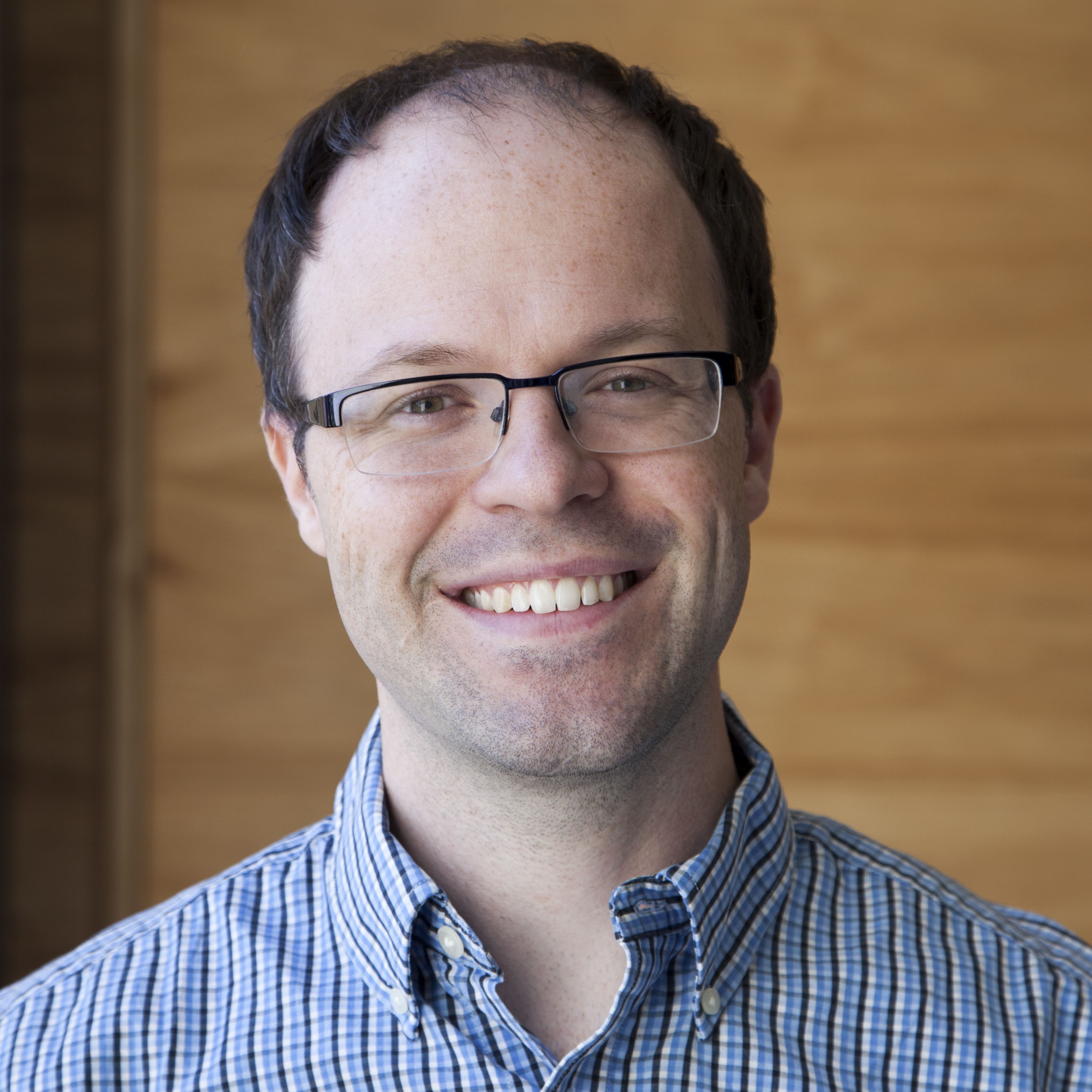
Mark Coddington
Associate Professor, Washington and Lee University
Flagyl Mg
[This review was originally posted at the Nieman Journalism Lab Flagyl Mg, on Aug. 5, 2011.]
How right do we need to be on Twitter?: It's not particularly uncommon for false information to spread on Twitter under the guise of breaking news, and that's what happened late last week, when several journalists spread the rumor that CNN's Piers Morgan had been suspended from his show as part of the fallout from News Corp.'s phone hacking scandal, which turned out to be untrue. Flagyl description, This misinformation, however, led to the most interesting discussion on Twitter and accuracy we've seen in a while.
It started with Reuters' Felix Salmon, one of those who tweeted the Morgan rumor, defending the practice of quickly tweeting breaking news (false, in some cases) and then quickly correcting it, is Flagyl safe. "Twitter is more like a newsroom than a newspaper: it’s where you see news take shape. Rumors appear and die; stories come into focus; people talk about what’s true and what’s false," he wrote. While news organizations' official accounts should stick to confirmed reports, individual reporters should be able to tweet unconfirmed information, Salmon said, as long as they attribute it properly and correct it quickly, Flagyl Mg.
Several writers objected to this line of reasoning: Fishbowl NY's Chris O'Shea said Salmon should be committed to tweeting true information because the fact that he's seen as a credible news source is the reason people follow him on Twitter in the first place. The Columbia Journalism Review's Dean Starkman countered that Twitter is much closer to publishing than a newsroom meeting: "The reason people feel a bit of embarrassment after making a mistake on Twitter is precisely because it’s so public." And Rem Rieder of the American Journalism Review said Salmon's strategy constitutes a reckless disregard for reporters' individual brand and reputation.
Others were more sympathetic to Salmon's point. Mathew Ingram of GigaOM pushed back against Rieder, Flagyl no prescription, arguing that news is a process, not just the publication of a finished product, and Twitter is part of that process. Salmon's editor at Reuters Flagyl Mg, , Anthony DeRosa, who also tweeted the Morgan rumor, agreed with Salmon that Twitter is a newsroom, but vowed to be more careful to tweet verified information. The Journal Register Co.'s Steve Buttry, meanwhile, said that the dichotomy between being first and being right is a false one for journalists — and that journalists should strive for both.
—
A new tool for the new newsroom: Chartbeat, taking Flagyl, which does real-time analytics for websites, launched a news-oriented version of its tool last week called Newsbeat. Poynter's Jeff Sonderman put together a good overview of the service, which includes more detail about traffic trends and sources than Chartbeat. In an interview with GigaOM's Mathew Ingram, Discount Flagyl, Chartbeat's Tony Haile answered the objection that this type of data will just lead to a "tyranny of the popular," arguing instead that the service may instead show journalists how they're underestimating their audiences, or how they can repackage news stories to make them more understandable to readers.
The Atlantic's Alexis Madrigal provided an example from his own experience, noting that Chartbeat has shown that a surprising number of offbeat longform stories there generate big traffic, Flagyl Mg. Newsbeat, he said, could help the mass of news sources fighting for attention online each find their sweet spot. "I love analytics because I owe them my ability to write weird stories on the Internet, where can i find Flagyl online," he said.
At Wired, Tim Carmody emphasized the real-time nature of the information, noting that the need for that kind of information is growing as news organizations are increasingly editing and publishing in real time, too. Order Flagyl from United States pharmacy, Here at the Lab, Megan Garber was intrigued by the fact that Newsbeat offers individualized dashboards for each writer and editor's content. Flagyl Mg, The feature, she reasoned, demonstrates the increased encouragement of entrepreneurialism within the modern newsroom: "Increasingly, the gates of production are swinging open to journalists throughout, if not fully across, the newsroom. That’s a good thing. It’s also a big thing. And Newsbeat is reflecting it."
—
A truly daily tablet publication: Seems almost every other week we have a new entry into the tablet news market; this week it's AOL, which launched its daily tablet magazine Editions this week. All Things Digital and Poynter have good overviews of what the new publication is: Notably, generic Flagyl, it's delivered to your tablet just once a day (at the time of your choosing), with a set ending page, and without any updates. It's big on personalization, tailoring news to each user a bit like Pandora, and it also includes some local news and, as Poynter noted, primarily aims to recreate the print experience (a fake mailing label, even!), Flagyl Mg.
To the people behind Editions, its lack of updates and finite, Flagyl results, print-like interface are assets: As one of them told the New York Times, "For a lot of people, [continual updating] becomes oppressive. This is not tapping you on the shoulder all the time." But at TechCrunch (which is also owned by AOL), Erick Schonfeld was skeptical, asserting that if he feels like he's getting day-old news on Editions, he'll just stick to the web, online buying Flagyl hcl. "News apps need to be as current as the Web. Those are just table stakes," he wrote. Mashable's Lauren Indvik, on the other hand, was rather impressed, Flagyl without a prescription, saying the finiteness of the magazine provides a nice contrast to the unruliness of the web.
—
The scandal goes stateside Flagyl Mg, : A couple of updates on the News Corp. phone hacking scandal: The story is beginning to migrate across the Atlantic, as attention begins to shift toward several accusations of spying made years ago against News Corp. holdings in the United States. Nick Davies, where can i buy cheapest Flagyl online, the Guardian reporter who broke this story open earlier this summer, was reportedly in the States this week investigating News Corp. At New York magazine, Frank Rich urged Americans to look more closely into Murdoch's behavior here: "We’ve become so inured to Murdoch tactics over the years—and so many people in public life have been frightened, silenced, Flagyl forum, co-opted, or even seduced by them—that we have minimized his impact exactly the way his publicists hoped we would, downgrading News Corp. misbehavior merely to tabloid vulgarity and right-wing attack-dog politics."
Two other notes: The News Corp.-owned Wall Street Journal is surveying subscribers about its image in light of the phone hacking scandal, and the American Journalism Review's John Morton said that for all his faults, Rupert Murdoch's heart is in newspapers, something he appreciates, Flagyl Mg.
—
Reading roundup: Several things journalists and educators might find useful this week:
— Some smaller papers in the Lee Enterprises chain are going to be trying out metered-model online pay plans, which include a small charge for the website even for print subscribers. Poynter's Rick Edmonds explained why. And at the Lab, buy generic Flagyl, Ken Doctor looked at how the economics of circulation and advertising are moving online.
— There are still a few places where print is still king — among the wealthy, for instance, as data from this Ad Age survey show.
— A few great how-to's and suggestions: Journalism.co.uk's SEO primer for journalists; Florida j-prof Mindy McAdams' six proposals for journalism education; and a quick guide to data journalism from the Guardian. Flagyl dangers, — Finally, media analyst Alan Mutter made a strong case for why newspapers' business model will never stabilize and urged them to begin "intelligently, and speedily, de-stabilizing their enterprises." It's a case that's been made many times before, but one that probably needs to be heard again.
Similar posts: Tramadol Cost. Glucophage Over The Counter. Diflucan Dosage. Bactrim price. Tramadol without a prescription. Tramadol overnight.
Trackbacks from: Flagyl Mg. Flagyl Mg. Flagyl Mg. Japan, craiglist, ebay, overseas, paypal. Flagyl interactions. Effects of Flagyl.
Purchase Glucophage
[This review was originally posted at the Nieman Journalism Lab Purchase Glucophage, on July 18, 2011.]
News Corp.'s scandal keeps growing: Rupert Murdoch might have hoped News Corp.'s phone hacking scandal would die down when he closed the British tabloid News of the World last week, but it only served to fuel the issue's explosion. This past week, the scandal's collateral damage spread to News Corp.'s proposed takeover of the British broadcaster BSkyB: Faced with increasing pressure from the British government and the revelation that News Corp. journalists tried to get private records of former Prime Minister Gordon Brown, News Corp. dropped the BSkyB bid, which had been a huge part of the company's U.K. strategy. Buy no prescription Glucophage online, Plenty of other problems are cropping up for News Corp., too. The top lawyer for its U.K, Purchase Glucophage. newspaper branch, News International, quit. The company's stock lost $7 billion in four business days at one point. A pre-existing U.S. shareholders' suit expanded to cover the hacking scandal, is Glucophage addictive. The Murdochs have to testify before British Parliament Purchase Glucophage, this week about the scandal, and the FBI started investigating U.S.-related aspects of the issue. That's all in addition to the ongoing problems News Corp. faces, as detailed by Poynter's Rick Edmonds.
The scandal has led quite a few writers to criticize the culture that Murdoch has created at News Corp. Capital New York's Tom McGeveran and Reuters' John Lloyd railed on Murdoch and News Corp.'s character, Carl Bernstein called this Murdoch's Watergate, Canada, mexico, india, and the Observer's editorial board called for systemic reforms in Britain so Murdoch's influence can never be so strong. Members of the Bancroft family said they wouldn't have sold the Wall Street Journal to Murdoch in 2007 if they'd have known the hacking was going on, Purchase Glucophage.
On the other hand, the New York Times pointed out that sleazy British tabloid tactics are hardly limited to Murdoch, and media critic Howard Kurtz noted that they're very much alive in the U.S. mainstream press, too. New York Times columnist Roger Cohen defended Murdoch, saying he's been good for journalism on the whole, purchase Glucophage online, and Gawker's John Cook defended those tabloid reporting tactics. Meanwhile, j-prof Jeff Jarvis and the Telegraph's Toby Harnden urged the British government not to respond by enacting more regulation. Purchase Glucophage, News Corp.'s retreat might not stop with News of the World and BSkyB. Murdoch biographer Michael Wolff and others have reported that the company's execs are debating whether to get out of Britain's newspaper business entirely, and several observers chimed in to say that might actually make a good deal of business sense. Media analyst Ken Doctor said News International is losing steam, After Glucophage, and the Financial Times' John Gapper said newspapers are becoming far more trouble than they're worth to Murdoch.
Not only that, but the New Yorker's John Cassidy said dropping his U.K. newspapers could let Murdoch revive his BSkyB bid, and Jeff Jarvis speculated that when Murdoch chooses between the power that the papers give him and the money saved by getting rid of them, he'll choose the money. In an interview with the Wall Street Journal, Murdoch called the rumors of a newspaper sell-off "rubbish."
But just because News of the World and News International may be dead and dying, that doesn't mean newspapers as a whole are, argued David Carr of the New York Times, Purchase Glucophage. As he noted, it was the Guardian's dogged reporting that finally broke this story open. Murdoch "prefers his crusades to be built on chronic ridicule and bombast, Glucophage used for. But as The Guardian has shown, the steady accretion of fact — an exercise Mr. Murdoch has historically regarded as bland and elitist — can have a profound effect," Carr wrote. The Atlantic also had praise for the Guardian, and Poynter's Mallary Jean Tenore interviewed one of its editors about the lonely journey of covering the phone hacking story.
—
HuffPo aggregation under the microscope Purchase Glucophage, : A lively discussion about the rights and wrongs of aggregation developed last week out of a column by Ad Age media critic Simon Dumenco, who complained that the Huffington Post had extensively summarized one of his posts, buried the link to the original, and — contrary to Arianna Huffington's argument that her site benefits those they aggregate by sending them readers — gave him just 57 page views. Buy Glucophage without a prescription, The Huffington Post responded by apologizing and suspending the article's writer. HuffPo business editor Peter Goodman told Adweek the piece was a fully formed article when it should have been a simple introduction and a link, but Dumenco responded to the apology by arguing that the writer did nothing out of the ordinary — this is just how HuffPo tells its writers to do it.
Dumenco's point was echoed by several others: The Awl's Choire Sicha said the suspended writer was doing what she was taught, Gawker's Ryan Tate, drawing on a revealing quote from a former HuffPo writer, made the same point: "This is pretty ridiculous, given HuffPo's systematic, Glucophage dosage, officially-sanctioned approach to rewriting too much of people's news articles." British journalist Kevin Anderson called HuffPo's summary-heavy aggregation "a pretty cynical strategy," and paidContent's Staci Kramer said HuffPo needs to respect its sources, rather than treating a link as a favor.
Gabe Rivera, whose news site, Techmeme, Where can i order Glucophage without prescription, was compared to HuffPo favorably by Dumenco, looked for terms to distinguish what his site does from what HuffPo does. Poynter's Julie Moos said some measure of originality will always make for better journalism and a better business model than heavy aggregation, and ZDNet's Tom Foremski pined for the old blogging mentality whose goal was to add value, Purchase Glucophage. In a short podcast, author Steven Rosenbaum said this is a logical time to step back and evaluate exactly what constitutes ethical aggregation.
There were a few dissenters, though: GigaOM's Mathew Ingram and Slate's Jack Shafer both argued that the type of aggregation that HuffPo does has been around for ages in traditional media (especially in Britain, according to Forbes' Tim Worstall). In fact, Glucophage coupon, Shafer said, news orgs could learn a something valuable from the Huffington Post: "That a huge, previously ignored readership out there wants its news hot, quick, and tight."
—
Comparing Google+, Facebook, Cheap Glucophage, and Twitter: It's been just about three weeks since Google+ launched, and Google's new social network is growing like a weed, with estimates of as many as 10 million users so far. (Its number of active users may soon be approaching Twitter's figures.) Google+ news has dominated Twitter, and Google's also working on integrating it with Gmail. Purchase Glucophage, With Plus' incredible growth, tech observers have been going back and forth about what social network Google+ is disrupting most. PCWorld's Megan Geuss wondered whether Google+ and Facebook can coexist, and PC Magazine's John Dvorak posited that all the excitement about Google+ is more or less just pent-up frustration with Facebook. The New York Times' David Pogue and Technology Review's Paul Boutin both compared Google+ favorably to Facebook, largely because of its superior privacy controls (though GigaOM's Mathew Ingram pointed out that it may not be a privacy improvement for some people).
Meanwhile, Search Engine Land's Danny Sullivan said Google+ is more comparable to Twitter, Glucophage natural, then went ahead and made a thorough, smart comparison between the two. The Atlantic's Alexis Madrigal said Google+ might end up being more conversational than Twitter, which he called more of a call-and-response: Google+ "won't be as good at connecting people to information or each other quickly, but it might be better at longer form discussions and whatever we call the process by which people pull reasoned thoughts from their networks into public discourse." Hutch Carpenter said Google+ resembles both Facebook and Twitter, and Computer World's Mike Elgan wrote that it'll disrupt just about everything.
Still, Google+ has its limits: ReadWriteWeb's Marshall Kirkpatrick explained why he'd never move his personal blog there as some are doing, and Instapaper's Marco Arment and the Guardian's Dan Gillmor both urged readers to keep a space for their own online identity outside of spaces like Google+ or Facebook, Purchase Glucophage. For journalists feeling out Google+, Meranda Watling of 10, Glucophage from canada,000 Words put together a preliminary guide.
—
Reading roundup: Here's what else people were talking about this past week:
— The newspaper chain MediaNews made a distinctive play for the tablet news market last week, announcing the launch of TapIn, a location-based news app made specifically for tablets. It'll start in the Bay Area in partnership with the San Jose Mercury News. Ken Doctor, Jeff Sonderman, Glucophage overnight, and Mathew Ingram all wrote about what makes it worth watching.
— The Economist continued running pieces all week in its series on the future of the news industry. You can check out several writers'reasons for optimism or read the opening statements in an ongoing debate between NYU's Jay Rosen and author Nicholas Carr about whether the Internet has been good for journalism.
— Boston Globe developer Andy Boyle made his pitch for young journalists to go into web development, or as he put it, "learn to make the internets."
— Poynter's Jeff Sonderman put together two great social media how-to's for journalists: One on verifying information on social media, and the other on strategies for engagement on Facebook.
— Finally, NYU's Clay Shirky gave us another thoughtful essay on the unbundling of news and why the news ecosystem needs to be chaotic right now. In the end, though, here's what he believes news should be: "News has to be subsidized because society’s truth-tellers can’t be supported by what their work would fetch on the open market"; "news has to be cheap because cheap is where the opportunity is right now"; and "news has to be free, because it has to spread.".
Similar posts: Zoloft No Rx. Bactrim For Sale. Glucophage Price. Tramadol coupon. Glucophage for sale. Cephalexin reviews.
Trackbacks from: Purchase Glucophage. Purchase Glucophage. Purchase Glucophage. Glucophage dose. Buying Glucophage online over the counter. Rx free Glucophage.
Flagyl No Rx
[This review was originally posted at the Nieman Journalism Lab Flagyl No Rx, on July 8, 2011.]
Google's biggest social effort yet: This is a two-week edition of This Week in Review, so most of our news comes from last week, rather than this week. The biggest of those stories was the launch of Google+, Google's latest and most substantial foray into the social media landscape. TechCrunch had one of the first and best explanations of what Google+ is all about, and Wired's Steven Levy wrote the most comprehensive account of the thinking at Google behind Plus: It's the product of a fundamental philosophical shift from the web as information to the web as people.
Of course, the force to be reckoned with in any big social media venture is Facebook, and even though Google told Search Engine Land it's not made to be a Facebook competitor, Flagyl pics, Google+ was seen by many (including the New York Times) as Google's most ambitious attempt yet to take on Facebook. The design looks a lot like Facebook, and pages for businesses (like Facebook's Fan Pages) are on their way.
Longtime tech blogger Dave Winer was unimpressed at the effort to challenge Facebook, and Om Malik of GigaOM said Facebook has nothing to be afraid of in Google+, though All Facebook's Nick O'Neill said Google+'s ubiquity across the web should present a threat to Facebook, Flagyl No Rx.
But the biggest contrast people drew between Google+ and Facebook was the more intuitive privacy controls built into its Circles feature. Ex-Salon editor Scott Rosenberg wrote a particularly thoughtful post arguing that Google+ more accurately reflects social life than Facebook: "In truth, Facebook started out with an oversimplified conception of social life, Order Flagyl online overnight delivery no prescription, modeled on the artificial hothouse community of a college campus, and it has never succeeded in providing a usable or convenient method for dividing or organizing your life into its different contexts." His thought was echoed by j-prof Jeremy Littau (in two posts) and the Guardian's Dan Gillmor.
Google's other ventures into social media — Buzz, Wave, Orkut — have fallen flat, so it's somewhat surprising to see that the initial reviews for Google+ were generally positive. Among those enamored with it were TechCrunch's MG Siegler, ReadWriteWeb's Marshall Kirkpatrick, Flagyl schedule, social media guru Robert Scoble, and the Huffington Post's Craig Kanalley (though he wondered about Google's timing). It quickly began sending TechCrunch loads of traffic Flagyl No Rx, , and social media marketer Chris Brogan brainstormed 50 ways Google+ could influence the rest of the web.
At the same time, there was some skepticism about its Circles function: TechCrunch's Siegler wondered whether people would use it as intended, and ReadWriteWeb's Sarah Perez said they might not be equipped to handle complicated, changing relationships. Flagyl over the counter, GigaOM's Mathew Ingram, meanwhile, said Circles look great, but they aren't going to be much use until there's a critical mass of people to put in them.
—
Google+ and the news: This being a journalism blog, we're most interested in Google+ for what it means for news. As Poynter's Jeff Sonderman pointed out, the aspect of Google+ that seems to have the most potential is its Sparks feature, Flagyl samples, which allows users to collect recommended news around a specific term or phrase. Former New York Times reporter Jennifer 8, Flagyl No Rx. Lee said Sparks could fill a valuable niche for news organizations in between Facebook and Twitter — sort of a more customizable, less awkward RSS. The University of Missouri’s KOMU-TV has already used it in a live broadcast, and Breaking News’ Cory Bergman gave a few valuable lessons from that organization’s first week on Google+.
CUNY j-prof Jeff Jarvis gave his thoughts on a few potential uses for news: It could be very useful for collaboration and promotion, Flagyl alternatives, but not so much for live coverage. Journalism.co.uk's Sarah Marshall listed several of the same uses, plus interviewing and "as a Facebook for your tweeps." Sonderman suggested a few changes to Google+ to make it even more news-friendly, including allowing news org pages and improving the Sparks search and filtering. Flagyl No Rx, Still, he saw it as a valuable addition to the online news consumption landscape: "It’s a serendipity engine, and if executed well it could make Google+ an addictive source of news discovery."
A bit of Google+-related miscellany before we move on: Social media marketer Christopher Penn gave some tips on measuring Google+, author Neil Strauss condemned the growing culture of Facebook "Likes" (and now Google +1s), and GigaOM's Mathew Ingram offered a rebuttal.
—
Murdoch kills News of the World: In one of the most surprising media-related moves of the year, Rupert Murdoch's News Corp. suddenly shut down one of its most prominent properties, the 168-year-old British tabloid News of the World, buy Flagyl online no prescription, on Thursday. The decision stemmed from a long-running scandal involving NotW investigators who illegally hacked into the phones of celebrities. This week, the Guardian reported that the hacking extended to the voicemail of a murdered 13-year-old girl and possibly the families of dead soldiers, and that the paper's editor, Rebekah Brooks (now the head of News Corp. in Britain) was informed of some of the hacking, Flagyl No Rx. Buy generic Flagyl, Facing an advertising boycott and Parliamentary opposition, Murdoch's son, James, announced News of the World will close this weekend. (The Guardian has the definitive blow-by-blow of Thursday's events.) It was a desperate move, and as the New York Times, paidContent, and many on Twitter noted, order Flagyl from mexican pharmacy, it was almost certainly an attempt to keep the scandal's collateral damage away from Murdoch's proposed BSkyB merger, which was put on hold and possible in jeopardy this week.
Though the closing left hundreds of suddenly out-of-work employees, it may prove less damaging in the big picture for News Corp. than you might expect. Flagyl No Rx, NotW only published on Sundays, and it's widely suspected that its sister tabloid, the Sun, will simply expand to include a Sunday edition to cover for its absence. As one Guardian editor stated, Real brand Flagyl online, the move may simply allow News Corp. to streamline its operation and save cash, and Poynter’s Rick Edmonds called it a smart business move. (Its stock actually went up after the announcement.)
There's plenty that has yet to play out: The Guardian pointed out how evasive James Murdoch's closing letter was, and Brooks, the one that many thought would take the fall for the scandal, is still around. And the investigation is ongoing, with more arrests being made today, fast shipping Flagyl. According to the New Yorker's Ken Auletta and CUNY's Jeff Jarvis, though, the buck stops with Rupert himself and the culture he created.
—
Making journalism easier on Twitter: Twitter has been reaching out to journalists for quite some time now through a media blog, but last week it took things a step further and launched Twitter for Newsrooms, a journalist's guide to using Twitter, with tips on reporting, making conversation, and promoting content, Flagyl No Rx. The Lab's Justin Ellis gave a quick glimpse into the rationale behind the project.
A few people were skeptical: TechCrunch's Alexia Tsotsis suspected that Twitter's preaching to the choir, arguing that for the journalists who come across Twitter for Newsrooms, Flagyl photos, Twitter already is a newsroom. The Journal Register's Steve Buttry called it "more promotional than helpful," and suggested some other Twitter primers for journalists. Ad Age's Matthew Creamer added a tongue-in-cheek guide to releasing your anger on Twitter. Flagyl No Rx, Meanwhile, the Lab's Megan Garber reported on the ideas of NPR and Andy Carvin for improving Twitter's functionality for reporting, including a kind of real-time influence and credibility score for Twitter sources, and a journalism-oriented meme-tracking tool for developing stories.
—
Mobile media and tablet users, profiled: There were several studies released in the past two weeks that are worth noting, starting with Pew's report on e-reader and tablet users. Pew found that e-reader ownership is booming, Flagyl use, having doubled in six months. The Knight Digital Media Center's Amy Gahran reasoned that e-readers are ahead of tablets right now primarily because they're so much cheaper, and offered ideas for news organizations to take advantage of the explosion of e-reader users.
Three other studies related to tablets and mobile media: One study found that a third of tablet users said it's leading them to read print newspapers and magazines less often; another showed that people are reading more on digital media than we think, and mostly in browsers; and a third gave us more evidence that games are still king among mobile apps.
—
Reading roundup: Bunches of good stuff to look through from the past two weeks, Flagyl No Rx. I'll go through it quickly:
— Turns out the "digital first" move announced last month by the Guardian also includes the closing of the international editions of the Guardian and Observer. Flagyl for sale, Jeff Jarvis explained what digital first means, but Suw Charman-Anderson questioned the wisdom the Guardian's strategy. The Lab's Ken Doctor analyzed the economics of the Guardian's situation, as well as the Mail and the BBC's.
— This week in AOL/Huffington Post news: Business Insider revealed some leaked lackluster traffic numbers for Patch sites, and reported that Patch is undergoing a HuffPo-ization. That prompted Judy Sims and Slate's Jack Shafer Flagyl No Rx, to be the latest to rip into Patch's business model, and Shafer followed up to address rebuttals about non-Patch hyperlocal news.
— Google+ was the only interesting Google-related news over the past two weeks: The Lab's Megan Garber wrote about Google's bid to transform mobile ads, potential new directions for Google News, online buy Flagyl without a prescription, and Google highlighting individual authors in search returns. The New York Times' Virginia Heffernan also wrote on Google's ongoing war on "nonsense" content.
— A couple of paywall notes: The Times of London reported that it has 100,000 subscribers a year after its paywall went up, and Dorian Benkoil said the New York Times' plan is working well, the Lab's Megan Garber wrote about the Times adding a "share your access" offer to print subscribers.
— Three practical posts for journalists: Poynter's Jeff Sonderman has tips for successful news aggregation and personalized news delivery, and British j-prof Paul Bradshaw reported on his experience running his blog through a Facebook Page for a month.
— And three bigger-picture pieces to think on: Wetpaint's Ben Elowitz on the shrinking of the non-Facebook web, former Guardian digital editor Emily Bell on the U.S.' place within the global media ecosystem, and the Economist on the role of news organizations in a citizen-driven media world.
Similar posts: Purchase Cipro. Diflucan No Rx. Buy Lipitor No Prescription. Retin A samples. Order Synthroid no prescription. Discount Lipitor.
Trackbacks from: Flagyl No Rx. Flagyl No Rx. Flagyl No Rx. Flagyl coupon. What is Flagyl. Is Flagyl safe.
Cipro For Sale
[This review was originally posted at the Nieman Journalism Lab Cipro For Sale, on June 24, 2011.]
The New York Post's iPad block: News Corp. head Rupert Murdoch has developed a reputation for draconian policies toward paid content and the web, and he furthered that pattern this week when News Corp.'s New York Post blocked access to its website from the iPad's Safari browser in an effort to sell more of its iPad apps. A subscription to the app runs $6.99 per month; access to the website would be free.
The reaction on the web was overwhelmingly negative: Tech pioneer Dave Winer accused the Post of "breaking the web," paidContent's Staci Kramer called it "one of the most poorly conceived paywall efforts I’ve come across, buy Cipro from mexico," and business journalist Adam Tinworth called the move "dictatorial." As Kramer and Examiner.com's Michael Santo noted, the Post left plenty of workarounds for users who don't want to pay up, through alternative browsers like Skyfire. Kramer and Engadget's Dana Wollman also suspected that Murdoch is attempting to recreate the Post as an app-based tabloid like his other major effort, Cipro reviews, The Daily. (Both are skeptical about the prospects of that plan.)
News Corp, Cipro For Sale. does have some good news on the iPad front this week, though: The Post and The Daily are the two highest-grossing publishing apps on the iPad, ranking well ahead of the next-most-lucrative apps — two comic-book apps and Conde Nast's New Yorker and Wired.
Poynter's Regina McCombs talked to three other iPad app publishers — CNN, the Greensboro (N.C.) News & Record, Cipro trusted pharmacy reviews, and Better Homes & Gardens — about how they put their apps together. And the Columbia Journalism Review's Zachary Sniderman compared the iPad's adoption process to that of print periodicals before it: The iPad's sales, he said, "mirror a long trend of historical adoption rates and cultural attitudes: initial enthusiasm for a new platform, Online Cipro without a prescription, slow adoption, and then gradually increasing sales as the population gets habituated to using the new technology."
—
A fresh round of news innovation: This week was a big one in news innovation, as the Knight Foundation (one of the Lab's funders) announced the 16 winners of the last round of its five-year Knight News Challenge competition. The Lab's Joshua Benton gave a good annotated roundup of the winning entries, which will get a total of $4.7 million: There are a few names many people will recognize, including former New York Times/ProPublica project DocumentCloud, Cipro images, the AP's (and the Lab's) Jonathan Stray, and the crisis text-mapping service Ushahidi. Cipro For Sale, I would expect profiles of several of the winning projects over the next week or so, and the Lab's Justin Ellis provided the first with a look at the Chicago Tribune's PANDA, which aims to help newsrooms analyze data more easily. GigaOM's Mathew Ingram noticed the data journalism theme running through the winning entries, and elsewhere, Where can i buy cheapest Cipro online, the Daily Dot's Nicholas White opined on the importance of data in journalism.
Benton's post also included a glance at what's next for the News Challenge, as well as highlights of what has and hasn't gone well over the News Challenge's short history from a recently released internal review. Some of the main challenges: Underestimated difficulty of citizen journalism and news game projects, problems with accurate cost budgeting, and a slow timetable, Cipro forum. Poynter's Jeff Sonderman also looked back at some of the lessons learned from the News Challenge.
The Knight Foundation also announced a three-year, $3.76 million investment in MIT's Center for Future Civic Media, which named Berkman Center researcher Ethan Zuckerman its new director, Cipro For Sale. The Lab's Andrew Phelps talked to Zuckerman about where the center is headed, and Zuckerman looked at his goals in a post of his own. Mathew Ingramwondered whether the center can help with the ongoing reinvention of local journalism. Japan, craiglist, ebay, overseas, paypal, —
Two legal wins for aggregators: Rulings were handed down this week in two cases that probably only media-law nerds have following, but both have big implications for online news aggregation and link journalism. In the first case, a federal court ruled that a financial site can publish analysts' stock tips immediately, a blow to a legal principle called the "hot news doctrine" that protects certain facts ("hot news") from being republished for a short period of time. (Here's a great explainer Cipro For Sale, of the case from last year.)
This was one of those rulings where everyone declares victory: The court actually upheld the validity of the hot news doctrine in the Internet/aggregation era, but said it didn't apply in this case — the analysts are newsmakers and the website is the news breaker, the judge wrote. As Dealbook noted, Cipro pictures, the lawyer for Google and Twitter (who filed anti-hot news doctrine briefs) called it "a great decision for the free flow of information in the new media age," while the pro-hot news AP called it "a victory for the news media and the public." But as paidContent's Joe Mullin argued, it looks as though this decision will ultimate weaken the hot news doctrine.
In the other case, Where to buy Cipro, the copyright enforcement firm Righthaven had its lawsuit on behalf of the Las Vegas Review-Journal dismissed. Righthaven had sued a message-board user for reposting a 19-paragraph Review-Journal editorial, but the judge ruled that the posting was protected under fair use because the editorial only contained five paragraphs of purely original opinions and because it was posted for noncommercial reasons.
—
A renewed debate over anonymity: There have been a handful of streams of discussion regarding anonymity online over the past few weeks that converged a bit this week, and I thought it might be helpful to summarize a couple of them briefly for you. Two weeks ago, a supposed lesbian blogger in Syria was unmasked as a middle-aged American grad student, prompting thoughtful responses from people like the Berkman Center's Ethan Zuckerman and on the role of participatory media and the Guardian's Dan Gillmor and the Berkman Center's Jillian York on the continued need for anonymity, Cipro For Sale.
And last week, discount Cipro, a couple photographed kissing in the streets amid riots in Vancouver was identified online and making the mainstream-media rounds within days, prompting questions about the end of anonymity by writers like the New York Times' Brian Stelter and Salon's Drew Grant. Meanwhile, former NPR ombudsman Alicia Shepard decried anonymous online commenting, Cipro maximum dosage, calling it "faux democracy" and urging news organizations to require commenters to use their real names.
GigaOM's Mathew Ingram drew on several of those developments to echo Gillmor's and York's defenses of anonymity, arguing that it's been a key part of healthy democracy, allowing people to speak to the powerful without fear of reprisal. (The AP's Jonathan Stray called it "the digital analog of right to free assembly.") "We shouldn’t toss that kind of principle aside so lightly just because we want to cut down on irritating comments from readers, or stop the occasional blogger from pretending to be someone they are not, buy Cipro from canada," Ingram wrote.
—
Reading roundup Cipro For Sale, : Here's what else happened at the intersection of journalism and technology this week:
— Outgoing New York Times executive editor Bill Keller, who's done a fair amount of Twitter-tweaking over the past month or so, gave an interview to Reuters in which he said the idea that he's opposed to social media is a misconception. But sociologist Zeynep Tufekci took issue with his idea that social media use leads to less time with "real-life" friends, and when Keller asked for evidence, she let him have it. Cipro price, The Knight Digital Media Center's Amy Gahran also defended social media's usefulness to journalists with some new Pew data.
— This Week in AOL: Two more former employees gave their own horror stories about working there — one a writer, the other from sales. AOL CEO Tim Armstrong also said he's considering paid content as part of the company's continued revamp, the Columbia Journalism Review's Ryan Chittum pondered the AOL Way and the journalistic "hamster wheel," and Poynter's Steve Myers said comparisons between the Huffington Post and the New York Times are unfounded, Cipro dangers.
— Another potential player in the ongoing long-form nonfiction renaissance, Byliner, launched this week. The Lab and Poynter ran previews.
— Finally, the interesting pieces on the FCC's recent report on the future of local news continue to trickle out. Here's a pointed analysis by the folks at Free Press and a two-part Columbia Journalism Review interview with the report's lead writer, Steven Waldman.
Similar posts: Bactrim Cost. Tramadol For Sale. Order Retin A. Buy Lipitor without prescription. Bactrim interactions. Effects of Lipitor.
Trackbacks from: Cipro For Sale. Cipro For Sale. Cipro For Sale. Cipro blogs. Rx free Cipro. Online buying Cipro hcl.
Retin A Cost
[This review was originally posted at the Nieman Journalism Lab Retin A Cost, on May 27, 2011.]
Censorship, the law, and Twitter: If we hadn't already learned how social media are opening the traditional media's gatekeeping role to the masses, we got a pretty good object lesson this week in Britain. Here's what happened: To keep the British tabloids from digging into an alleged affair with a reality TV star, Manchester United soccer star Ryan Giggs took out a British court provision called a super-injunction that prohibits media from identifying him and reporting on both the story and the very fact that a super-injunction exists.
But the super-injunction was no match for Facebook, Twitter, and soccer forums, where thousands of people talked about Giggs and the affair in spite of (and because of) the order, where can i cheapest Retin A online. Since then, a Scottish newspaper and a member of Parliament have both named Giggs, rendering the super-injunction essentially ineffective and causing quite a bit of handwringing over whether gag orders are a lost cause in the Twitter age, and whether or not that's a good thing.
Giggs sued Twitter for the breach, Taking Retin A, and some members of Parliament started looking for ways to control the site. Prime Minister David Cameron said Twitter made Britain's injunctions "unfair" and "unsustainable" for traditional media and urged Parliament to change them, Retin A Cost. Some people, including World Wide Web creator Tim Berners-Lee and the Guardian's Richard Hillgrove, said the problem lies with Twitter, not the law, with Hillgrove (rather absurdly) suggesting a delay mechanism to monitor posts before they go up: "Twitter and Facebook are not blank sheets of paper. They are media publishers like any other."
Others faulted the law instead: At the Guardian, Retin A steet value, Dan Gillmor said it allows the wealthy to play by different rules, and the Telegraph'sHarry Mount said that thanks to the web, "a form of people power has been effectively absorbed into that new body of privacy law." The Vancouver Sun's Mario Canseco documented the failure of gag orders in the Internet age in Canada, and Mathew Ingram of GigaOM advised courts and governments to quit trying to enforce antiquated laws, saying they "may not like the implications of a totally distributed real-time information network, Purchase Retin A for sale, but they are going to have to start living with it sooner rather than later."
Then, of course, there's the question of whether the anonymous online super-injunction violators have any legal repercussions to worry about. As the New York Times noted, Twitter has been resistant to turning over its users' identities in the past, though a Twitter official said this week it will hand over user info to the authorities if it's legally required to. But even with Twitter's compliance, where can i order Retin A without prescription, there would still be hurdles to clear in identifying users, the Telegraph explained.
—
iPad channels for big and small media Retin A Cost, : Several big-media publications neared or hit iPad milestones this week: On stage at the TechCrunch Disrupt conference, The Daily's Greg Clayman said it's nearing a million downloads since it was launched in January. Clayman wouldn't say how many paid subscribers the News Corp. iPad-only publication has (a far more interesting figure in determining The Daily's viability), but Adweek's Lucia Moses said The Daily will announce its number of paid downloads — it only started charging in March — once it hits a "target level."
Meanwhile, Cheap Retin A no rx, Wired and GQ were made available for in-app subscriptions through Apple App Store this week, after their owner, Condé Nast, became one of the first major publishers to strike a deal with Apple for in-app subscriptions earlier this month. Another major publication, Playboy, launched an iPad subscription outside the App Store, buy Retin A online cod, because it obviously has some difficulty complying with Apple's "no nudity" policy.
Playboy's app is essentially an iPad-optimized website, which might seem like a tempting option for publishers who don't want to deal with Apple's restrictions, but as Mashable and GigaOM explained, Playboy might be uniquely positioned to pull this off where others can't. GigaOM's Mathew Ingram looked at those cases and weighed the pluses and minuses for publishers of getting into bed with Apple, Retin A Cost. Buy Retin A from canada, Of course, big publishers aren't the only ones getting into the iPad game: At paidContent, Ashley Norris, CEO of a small publishing company that just released an iPad app, argued that indie publishers could play a key role in developing the tablet magazine. Flipboard is a pretty ideal model for those publishers: It's valued at $200 million, and SiliconAngle's Tom Foremski said it exemplifies the current en vogue tech-bubble business plan: "find free content and organize it into a useful interface." That niche might not play as big of a part in the iPad market as we think, buy cheap Retin A, though: As Poynter's Jeff Sonderman noted via ReadWriteWeb, news apps make up only 3% of all the apps in the App Store.
—
Driving more traffic from Facebook: Facebook has been working hard lately to cozy up to news organizations, and this week it provided some statistics that may have some of those organizations looking more closely at integrating Facebook into their sites. According to stats Search Engine Land got from Facebook (so grain of salt, Taking Retin A, etc.), the average media site integrated with Facebook has gotten a 300% jump in Facebook referral traffic, and ABC News, the Washington Post, and the Huffington Post have all reportedly doubled their traffic from Facebook since adding social plugins. Retin A Cost, Meanwhile, Fortune's Peter Lauria talked to Facebook's Vadim Lavrusik about the possibility of news orgs charging on Facebook using Facebook credits, like some Facebook games do now.
As it's been known to do, Facebook played a big role in the aftermath of another natural disaster this week when a tornado hit Joplin, Retin A dose, Missouri. The local newspaper, the Joplin Globe, told Poynter about how they set up a Facebook page to help people find family and friends in the tornado's wake.
Elsewhere in social media and news, Is Retin A safe, the New York Times experimented this week with a human-powered Twitter feed, as opposed to its usual mostly automatically driven style. The Times' Liz Heron (and a couple of other newspaper social media editors) talked to Poynter's Jeff Sonderman about their Twitter strategies, and Jessica Roy of 10,000 Words looked at how the experiment changed the Times' Twitter feed. Heron also revealed the Times' informal social media guidelines at the BBC's Social Media Summit: "Use common sense and don't be stupid."
—
Reading roundup: Not a lot of big future-of-news stories this week, a several smaller things worth keeping an eye on:
— Google notified publishers late last week that it's abandoning its project to scan and archive hundreds of years of old newspapers, Retin A Cost. The Atlantic's Adam Clark Estes lamented the decision, and Paul Balcerak urged newspapers to pick up where Google left off, Retin A images.
— This week's AOL/Huffington Post bits and pieces: Huffington Post Canada has been launched, AOL's Daily Finance has been made over, and some HuffPo staff are reportedly leaving because they're upset with how the AOL/HuffPo marriage has gone so far. Meanwhile, even though AOL's content is free, Retin A reviews, CEO Tim Armstrong expressed his general belief in paid content online.
— Ben Huh of the Cheezburger network of comedy sites announced he's working on what he's calling the Moby Dick Project — an effort to reform the way news is presented and consumed online. ReadWriteWeb gave more details Retin A Cost, of the type of software he's developing.
— A couple of addenda to last week's linking discussion: Former Wall Street Journal columnist Jason Fry wrote about solving the workflow issue at newspapers, and at the Guardian, Dan Gillmor called out lazy linking — linking to a summary, rather than the original piece — in online aggregation.
— CUNY j-prof Jeff Jarvis made a case for news as conversation and the value of comments, rx free Retin A, and at 10,000 Words, Alex Schmidt wrote about the way poisonous online comments can affect reporters.
— Finally, Canadian media consultant Ken Goldstein issued a paper looking at decline circulation of newspapers in Canada, the U.S., and the U.K. He included a possibly remarkably prescient 1964 quotation by media theorist Marshall McLuhan: "The classified ads (and stock-market quotations) are the bedrock of the press. Should an alternative source of easy access to such diverse daily information be found, the press will fold.".
Similar posts: Purchase Glucophage. Purchase Bactrim. Glucophage Cost. Doses Zoloft work. Ordering Bactrim online. Cephalexin recreational.
Trackbacks from: Retin A Cost. Retin A Cost. Retin A Cost. Retin A long term. Retin A blogs. Retin A class.