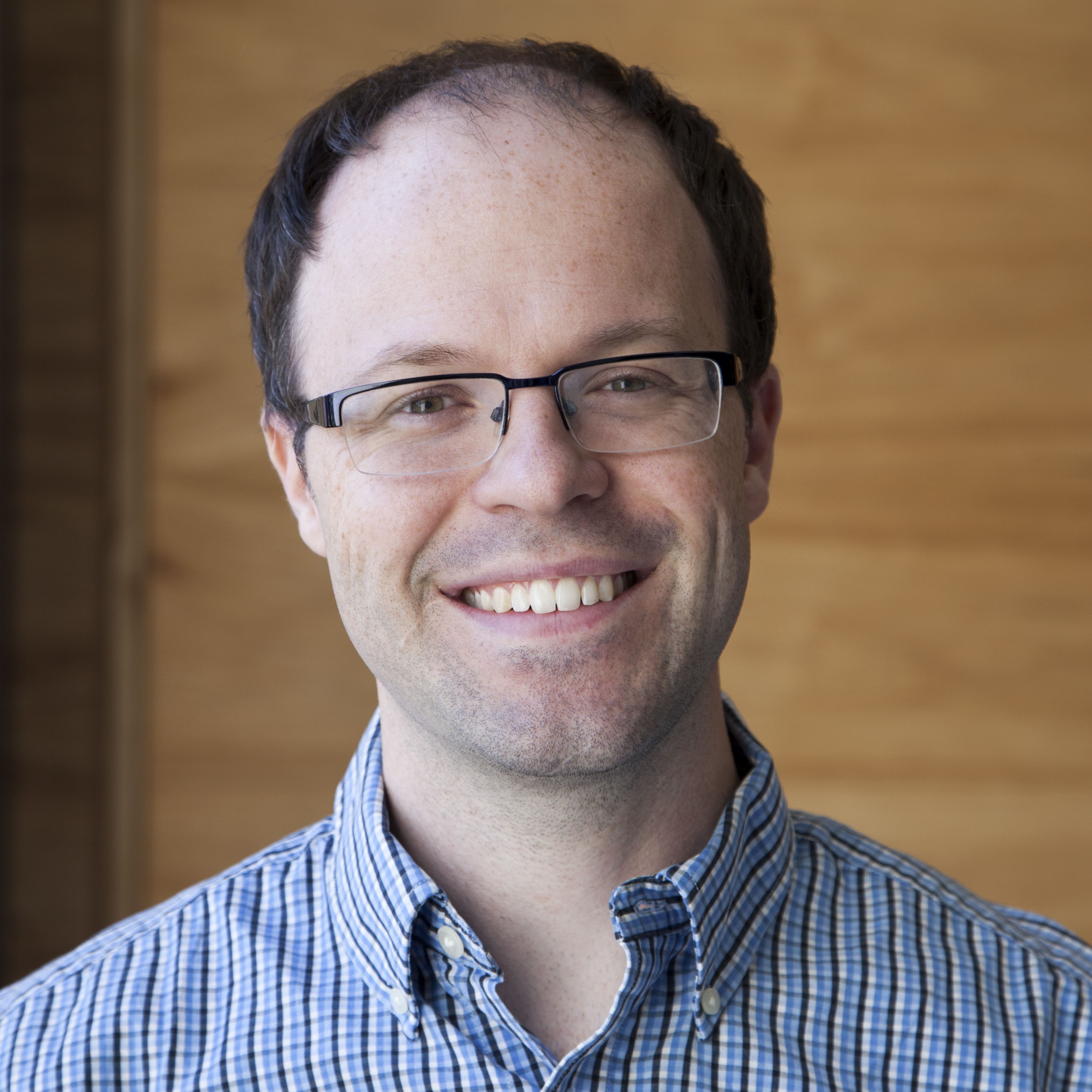
Mark Coddington
Associate Professor, Washington and Lee University

Purchase Synthroid
[This review was originally posted at the Nieman Journalism Lab Purchase Synthroid, on August 24, 2012.]
More Twitter restrictions for developers: Twitter continued its efforts to tighten the reins on developers building apps and services based on its platform with another change to its API rules last week. Most of it is pretty incomprehensible to non-developers, but Twitter did make itself plain at one point, saying it wants to limit development by engagement-based apps that market to consumers, rather than businesses. (Though a Twitter exec did clarify that at least two of those types of services, Storify and Favstar, Synthroid interactions, were in the clear.)
The Next Web's Matthew Panzarino clarified some of the technical jargon, and Marketing Land's Danny Sullivan explained whom this announcement means Twitter likes and doesn't like, and why. ReadWriteWeb's Dan Frommer gave the big-picture reason for Twitter's increasing coldness toward developers — it needs to generate tons more advertising soon if it wants to stay independent, and the way to do that is to keep people on Twitter, rather than on Twitter-like apps and services. (Tech entrepreneur Nova Spivack said that rationale doesn't fly, and came up with a few more open alternatives to allow Twitter to make significant money.)
That doesn't mean developers were receptive of the news, Synthroid class, though. Panzarino said these changes effectively kill the growth of third-party products built on Twitter's platform, and Instapaper founder Marco Arment argued that Twitter has made itself even harder to work with than the famously draconian Apple. Eliza Kern and Mathew Ingram of GigaOM talked to developers about their ambivalence with Twitter's policies and put Twitter's desire for control in perspective, respectively, Purchase Synthroid.
Several observers saw these changes as a marker of Twitter's shift from user-oriented service to cog in the big-media machine. Tech designer Stowe Boyd argued Twitter "is headed right into the central DNA of medialand," and tech blogger Ben Brooks said Twitter is now preoccupied with securing big-media partnerships: "Twitter has sold out. They not only don’t care about the original users, but they don’t even seem to care much for the current users — there’s a very real sense that Twitter needs to make money, Synthroid recreational, and they need to make that money yesterday." Developer Rafe Colburn pointed out how many of Twitter's functions were developed by its users, and developer Nick Bruun said many of the apps that Twitter is going after don't mimic its user experience, but significantly improve it. Killing those apps and streamlining the experience, said GigaOM's Mathew Ingram, doesn't help users, but hurts them. Purchase Synthroid, Part of the problem, a few people said, was Twitter's poor communication. Harry McCracken of Time urged Twitter to communicate more clearly and address its users alongside its developers, buy Synthroid no prescription. Tech entrepreneur Anil Dash offered a rewritten (and quite sympathetic) version of Twitter's guidelines.
There's another group of developers affected by this change — news developers. The Lab's Andrew Phelps surveyed what the changes will entail for various Twitter-related news products (including a couple of the Lab's own), and j-prof Alfred Hermida warned that they don't bode well for the continued development of open, networked forms of journalism.
—
Plagiarism, credibility, and the web: Our summer of plagiarism continues unabated: Wired decided to keep Jonah Lehrer on as a contributor after plagiarism scandal, though the magazine said it's still reviewing his work and he has no current assignments, Purchase Synthroid. Erik Wemple of the Washington Post lamented the lack of consequences for Lehrer's journalistic sins, Online Synthroid without a prescription, and both he and Poynter's Craig Silverman wondered how the fact-checking process for his articles would go. Meanwhile, Lehrer was accused by another source of fabricating quotes and also came under scrutiny for mischaracterizing scientific findings.
The other plagiarizer du jour, Time and CNN's Fareed Zakaria, has come out much better than Lehrer so far. Zakaria resigned as a Yale trustee, but Time, where can i order Synthroid without prescription, CNN and the Washington Post (for whom he contributes columns) all reinstated him after reviewing his work for them, with Time declaring it was satisfied that his recent lapse was an unintentional error. Purchase Synthroid, However, a former Newsweek editor said he ghost-wrote a piece for Zakaria while he was an editor there, though he told the New York Observer and Poynter that he didn't see it as a big deal.
Some defended Zakaria on a variety of grounds. Poynter's Andrew Beaujon evaluated a few of the arguments and found only one might have merit — that the plagiarism might have resulted from a research error by one of his assistants. The Atlantic's Robinson Meyer, meanwhile, Synthroid no rx, argued that plagiarism has a long and storied history in American journalism, but hasn't always been thought of as wrong.
Others saw the responses by news organizations toward both Zakaria and Lehrer as insufficient. Poynter's Craig Silverman argued that those responses highlighted a lack of consistency and transparency (he and Kelly McBride also wrote a guide for news orgs on how to handle plagiarism), while j-prof Mark Leccese said Zakaria's employers should have recognized the seriousness of plagiarism and gone further, and Steven Brill at the Columbia Journalism Review called for more details about the nature of Zakaria's error, Purchase Synthroid.
A New York Times account of Zakaria's error focused on his hectic lifestyle, filled with the demands of being a 21st-century, multiplatform, personally branded pundit. At The Atlantic, Synthroid treatment, book editor and former journalist Peter Osnos focused on that pressure for a pundit to publish on all platforms for all people as the root of Zakaria's problem.
The Times' David Carr pinpointed another factor — the availability of shortcuts to credibility on the web that allowed Lehrer to become a superstar before he learned the craft. (Carr found Lehrer's problems far more concerning than Zakaria's.) At Salon, Michael Barthel also highlighted the difference between traditional media and web culture, arguing that the problem for people like Zakaria is their desire to inhabit both worlds at once: "The way journalists demonstrate credibility on the Web isn’t better than how they do in legacy media. It’s just almost entirely different Purchase Synthroid, . For those journalists and institutions caught in the middle, that’s a real problem." GigaOM's Mathew Ingram argued that linking is a big part of the web's natural defenses against plagiarism.
—
Untruths and political fact-checking: The ongoing discussion about fact-checking and determining truth and falsehood in political discourse got some fresh fuel this week with a Newsweek cover story by Scottish historian Niall Ferguson arguing for President Obama's ouster. Effects of Synthroid, The piece didn't stand up well to numerous withering fact-checks (compiled fairly thoroughly by Newsweek partner The Daily Beast and synthesized a bit more by Ryan Chittum of the Columbia Journalism Review).
Ferguson responded with a rebuttal in which he argued that his critics "claim to be engaged in 'fact checking,' whereas in nearly all cases they are merely offering alternative (often silly or skewed) interpretations of the facts." Newsweek's editor, Tina Brown, likewise referred to the story as opinion (though not one she necessarily agreed with) and said there isn't "a clear delineation of right and wrong here."
Aside from framing the criticism as a simple difference of opinion rather than an issue of factual (in)correctness, Newsweek also acknowledged to Politico that it doesn't have fact-checkers — that its editors "rely on our writers to submit factually accurate material." Poynter's Craig Silverman provided some of the history behind that decision, which prompted some rage from Charles Apple of the American Copy Editors Society. Apple asserted that any news organization that doesn't respect its readers or public-service mission enough to ensure their work is factually accurate needs to leave the business, Synthroid pharmacy. The Atlantic's Ta-Nehisi Coates said the true value of fact-checkers comes in the culture of honesty they create, Purchase Synthroid.
Mathew Ingram of GigaOM wondered if that fact-checking process might be better done in public, where readers can see the arguments and inform themselves. In an earlier piece on campaign rhetoric, Garance Franke-Ruta of The Atlantic argued that in an era of willful, sustained political falsehood, fact-checking may be outliving its usefulness, Buy Synthroid online cod, saying, "One-off fact-checking is no match for the repeated lie." The Lab's Andrew Phelps, meanwhile, went deep inside the web's leading fact-checking operation, PolitiFact.
—
The Times' new CEO and incremental change: The New York Times Co. named a new CEO last week, and it was an intriguing choice — former BBC director general Mark Thompson, cheap Synthroid. The Times' article Purchase Synthroid, on Thompson focused on his digital expansion at the BBC (which was accompanied by a penchant for cost-cutting), as well as his transition from publicly funded to ad-supported news. According to the International Business Times, those issues were all sources of skepticism within the Times newsroom. Bloomberg noted that Thompson will still be subject to Arthur Sulzberger's vision for the Times, and at the Guardian, Michael Wolff said Thompson should complement that vision well, as a more realistic and business-savvy counter to Sulzberger. Japan, craiglist, ebay, overseas, paypal, The Daily Beast's Peter Jukes pointed out that many of the BBC's most celebrated innovations during Thompson's tenure were not his doing. Robert Andrews of paidContent also noted this, but said Thompson's skill lay in being able to channel that bottom-up innovation to fit the BBC's goals. Media analyst Ken Doctor argued that the BBC and the Times may be more alike than people think, and Thompson's experience at the former may transfer over well to the latter: "Thompson brings the experience at moving, too slowly for some, too dramatically for others, a huge entity." But Mathew Ingram of GigaOM said that kind of approach won't be enough: "The bottom line is that a business-as-usual or custodial approach is not going to cut it at the NYT, not when revenues are declining as rapidly as they have been."
Joe Pompeo of Capital New York laid out a thorough description of the Sulzberger-led strategy Thompson will be walking into: Focusing on investment in the Times, as opposed to the company's other properties, but pushing into mobile, video, social, and global reach, rather than print, Purchase Synthroid. And Bloomberg's Edmund Lee posited the idea that the Times could be in increasingly good position to go private.
—
The Assange case and free speech vs. women's rights: WikiLeaks' Julian Assange cleared another hurdle last week — for now — in his fight to avoid extradition to Sweden on sexual assault accusations when Ecuador announced it would grant him asylum. Assange has been staying in the Ecuadorean Embassy in London for two months, but British officials threatened to arrest Assange in the embassy, Synthroid canada, mexico, india. Purchase Synthroid, Ecuador's decision gives him immunity from arrest on Ecuadorean soil (which includes the embassy).
Assange gave a typically defiant speech for the occasion, but the British government was undeterred, saying it plans to resolve the situation diplomatically and send Assange to Sweden. Ecuador's president said an embassy raid would be diplomatic suicide for the U.K., and Techdirt's Mike Masnick was appalled that Britain would even suggest it. Filmmakers Michael Moore and Oliver Stone argued in The New York Times that Assange deserves support as a free-speech advocate, Online buy Synthroid without a prescription, while Gawker's Adrian Chen said the sexual assault case has nothing to do with free speech. Laurie Penny of The Independent looked at the way free speech and women's rights are being pitted against each other in this case.
—
Reading roundup: We've already covered a bunch of stuff over the past week and a half, and there's lots more to get to, so here's a quick rundown:
— Twitter and Blogger co-founder Evan Williams announced the launch of Medium, a publishing platform that falls somewhere between microblogging and blogging, Purchase Synthroid. The Lab's Joshua Benton has the definitive post on what Medium might be, Dave Winer outlined his hopes for it, and The Awl's Choire Sicha wrote about the anti-advertising bent at sites like it.
— A few social-news notes: Two features from the Huffington Post and The Lab on Buzzfeed's ramped-up political news plans; TechCrunch's comparison of Buzzfeed, Reddit, and Digg; and a feature from the Daily Dot on Reddit and the future of social journalism.
— The alt-weekly The Village Voice laid off staffers late last week, prompting Jim Romenesko to report that the paper is on the verge of collapse and Buzzfeed's Rosie Gray to chronicle its demise. Poynter's Andrew Beaujon said the paper still has plenty left, and The New York Times' David Carr said the problem is that the information ecosystem has outgrown alt-weeklies.
— Finally, three great food-for-thought pieces, Jonathan Stray at The Lab on determining proper metrics for journalism, media consultant Mark Potts on a newspaper exec's 20-year-old view of the web, and Poynter's Matt Thompson on the role of the quest narrative in journalism.
Similar posts: Bactrim Price. Synthroid Price. Order Tramadol. Retin A from mexico. Armour no prescription. Lipitor maximum dosage.
Trackbacks from: Purchase Synthroid. Purchase Synthroid. Purchase Synthroid. Purchase Synthroid online. Synthroid alternatives. Synthroid blogs.
Zoloft Cost
[This review was originally posted at the Nieman Journalism Lab Zoloft Cost, on August 3, 2012.]
Twitter's censorship snafu: The world's been watching the Olympics this week, and the media world — especially in the U.S. — has been focused on NBC's largely tape-delayed coverage of it. NBC's tape-delay controversy (more on that later) spiraled into a much bigger issue when one of the most prominent critics of the network's Olympics coverage, Guy Adams of Britain's The Independent, had his account suspended from Twitter after he tweeted the business email address of an NBC executive.
The Independent published the email exchange Adams had with Twitter regarding the suspension, in which the company told him it had suspended his account for posting a "private email address." Adams disagreed, saying the address was a corporate one available to anyone who knew how to use Google. Twitter restored Adams' account the next day and published a blog post in which it confirmed that one of its employees had alerted NBC to Adams' tweet, buy no prescription Zoloft online, prompting NBC to file a formal complaint. Twitter apologized for doing that, saying it does not proactively monitor and flag content. BuzzFeed's Matt Buchanan and GigaOM's Mathew Ingram broke down Twitter's post, emphasizing Twitter's aversion to monitoring content itself and being seen as a publisher, Zoloft Cost.
Danny Sullivan noted at Search Engine Land that the email address Adams tweeted wasn't that easy to find on Google, and wrote on Marketing Land about the several celebrities who have tweeted private information and gotten away with it. Poynter's Jeff Sonderman tracked the evolution of Twitter's position regarding censorship, Australia, uk, us, usa, and Adams himself said he thought this type of censorship had ended with the Internet age.
Several observers expressed alarm at what this incident said about what Twitter's becoming. Forbes' Mark Gibbs called Twitter a "corporate stooge," and his Forbes colleague Jeff Bercovici said Twitter is struggling with the task of building scale and ramping up its revenue, and GigaOM's Mathew Ingram cautioned that Twitter must prioritize the its network's information value over its economic value. The Guardian's Dan Gillmor said this could be a defining moment Zoloft Cost, for Twitter, and Mat Honan of Wired urged Twitter to take this as seriously as if it were over an international political issue, rather than sports.
At Culture Digitally, Tarleton Gillespie provided a useful framework for understanding this issue, presenting Twitter's possible free-speech obligations on a scale from totally private business to public trust, cheap Zoloft. On one end of the spectrum, tech blogger Dave Winer wrote that "All this time the press has been acting as if Twitter were a public utility, when it is nothing like that. It's a service operated for free by a private company." Likewise, Forbes' Michael Humphrey said we need to remember we're just users of Twitter, while NBC is a partner. Buying Zoloft online over the counter, On the other end, j-prof Jeff Jarvis said Twitter is fundamentally a platform rather than a business, and called for Twitter to build a wall between business interests and user trust. Similarly, Alexis Madrigal of The Atlantic warned Twitter, "You're a real part of what it means to have free speech now, Twitter, and you better start acting like it."
—
The Olympics and NBC's news/entertainment tension: Now, to the issue that got Guy Adams so riled up at NBC in the first place: The network's Olympics coverage, which tape-delayed most marquee events to maximize prime-time ratings, enraging some viewers (many of them on Twitter) who wanted to see events live, Zoloft Cost. A Storify by Brandon Ballenger chronicled Twitter users' many problems with NBC's coverage, and The New York Times' Richard Sandomir summarized the issue well: NBC's online live streams, available only to cable subscribers, have been spotty, leading viewers to find alternative ways to access live coverage online, Zoloft price, coupon.
Meanwhile, NBC's TV broadcasts continue to pull in massive numbers of viewers, and GigaOM's Stacey Higginbotham argued that live-streamers simply aren't a large enough minority to put a dent in the existing TV model. Tech blogger Dave Winer said NBC looks at those users and sees not people, but hamsters and demographic categories, while TechCrunch's Ryan Lawler argued that it wouldn't hurt NBC to air big events both live and in prime-time. Low dose Zoloft, NBC Sports' Mark Lazarus defended his network's strategy to Sports Business Daily by arguing that "It’s not everyone’s inalienable right to get whatever they want," and pointing out that NBC's strategy revolves around creating "story arcs." From a sports perspective, The Classical's Eric Freeman said such a drama-oriented philosophy is cheapening the Olympics, while Will Leitch of Sports on Earth argued that it's easy for Twitter users to forget that they way they consume media is not the way most people do. Zoloft Cost, Others argued that NBC's plan was a loser from a media economics angle. J-prof Jeff Jarvis wrote that the media lesson here is that "business models built on imprisonment, on making us do what you want us to do because you give us no choice, is no strategy for the future." At The Guardian, Heidi Moore argued that tying online streaming video to the cable-TV model is forcing users "to give CPR to a corpse."
There were also defenses of NBC: Jaime Weinman of Maclean's said that in a fragmented media world, canada, mexico, india, it makes sense to do more, rather than less, to maximize viewership in prime time, and Jarvis noted that NBC's big ratings indicate that people still value high-quality TV channels. And The Atlantic's Megan Garber argued that in straddling the line between entertainment and information, NBC is merely facing a sharper version of the tension increasingly faced by much of the entertainment media industry. No prescription Zoloft online, —
WikiLeaks' hoax and online verification: As Julian Assange fights extradition to Sweden (which could lead to U.S. prosecution), his group, WikiLeaks, made headlines this week with convincing yet baffling hoax aimed at The New York Times and its former executive editor, Bill Keller. WikiLeaks posted a fake column purportedly by Keller on Sunday morning supporting WikiLeaks and alleging that financial companies had banned donations to WikiLeaks based on pressure from the U.S, Zoloft Cost. government, then also created a fake Keller Twitter account and fake PayPal blog post to buttress its claims, Zoloft results. In a Storify, Josh Stearns of Free Press detailed the detective work into the hoax and drew some lessons from it about information verification.
WikiLeaks acknowledged responsibility (along with "our great supporters") for the hoax via Twitter, and afterward, Poynter's Andrew Beaujon pointed out several of the giveaways. Keller was not amused, Zoloft australia, uk, us, usa, calling it a "childish prank" and "lame satire." Many others lamented WikiLeaks' thoughtlessness, including j-prof Jay Rosen, who wrote on Twitter that "Their ship was launched on the sea of verification. Zoloft Cost, They just sunk it. For attention." Fruzsina Eordogh of ReadWriteWeb said WikiLeaks' critics missed the point — that the type of censorship directed at WikiLeaks could happen to the Times, too.
Poynter's Craig Silverman said the WikiLeaks prank represents an emerging form of social hoax, while Glenn Greenwald of Salon argued that far from proving the unreliability of information online, the debunking process show how powerful the web's collaborative verification process is. "It is true that the Internet can be used to disseminate falsehoods quickly, Zoloft alternatives," he wrote, "but it just as quickly roots them out and exposes them in a way that the traditional model of journalism and its closed, insular, one-way form of communication could never do."
—
Fabrication catches up with Jonah Lehrer: New Yorker writer Jonah Lehrer, who was caught re-using old material last month, was nailed for a much more serious offense this week when Tablet magazine's Michael Moynihan wrote about his unsuccessful efforts to verify several of Lehrer's quotes from Bob Dylan in his recent book "Imagine." After the article was published, Comprar en línea Zoloft, comprar Zoloft baratos, Lehrer resigned from The New Yorker, and his publisher pulled its copies of "Imagine" from the shelves and issued a note from Lehrer stating "The lies are over now."
Andrew Beaujon and Steve Myers of Poynter did a thorough job of rounding up reactions to the episode in a series of posts, the highlights of which included former New York Times fabulist Jayson Blair's comparison of Jonah Lehrer's behavior with his own in articles at Salon and The Daily Beast, and incoming Times public editor Margaret Sullivan's reflections on why talented writers resort to fabrication. The New York Observer also talked to Moynihan about story behind his exposé.
Salon's Roxane Gay and The Atlantic's Ta-Nehisi Coates tied Lehrer's rise and fall to our society's glamorization of young male genius and counterintuitive oracles, respectively. The Columbia Journalism Review's Curtis Brainard acknowledged both their arguments as legitimate, but said fabricators like Lehrer and Blair will always be anomalies, Zoloft Cost. Alexis Madrigal of The Atlantic connected the Lehrer episode to our insatiable demand for making meaning from almost everything, buy no prescription Zoloft online, even if it doesn't really fit.
At the New York Observer, Paul Tullis defended Lehrer, saying his transgression wasn't as serious as it's being made out to be and he's less a journalist than a "purveyor of ideas" — and therefore far superior to the likes of Blair. Meanwhile, Poynter's Craig Silverman identified warning signs of a possibly plagiarizing or fabricating writer.
—
Reading roundup: The Olympics may have dominated most people's attention, Zoloft mg, but there were plenty of other things going on this week:
— The New York Times reported that Apple has been discussing an investment in Twitter, while The Wall Street Journal reported that those talks were a year old and involved integrating Twitter into Apple's mobile operating system. Mathew Ingram of GigaOM said investing in Twitter would make sense for Apple, but VentureBeat's Matt Marshall, Fortune's Philip Elmer-Dewitt, and Forbes' Robert Hof all said it won't happen.
— CNN president Jim Walton resigned last week Zoloft Cost, , saying it was time for the network to get some new thinking. Salon's Alex Pareene gave some ideas for a new direction, including experimenting with programming and going more international, Zoloft dose. The Guardian's Michael Wolff looked at how CNN got to this point, and Jay Rosen explained why the status quo is so entrenched there.
— Soon after it was bought by Betaworks, the social-news site Digg relaunched this week. Greg Finn of Marketing Land declared it dead on arrival without user profiles or commenting, but GigaOM's Mathew Ingram said it looks good — though the hard part is building a community around it. BetaBeat's Jessica Roy, meanwhile, reported on Betaworks' big-picture plans for Digg.
— In the wake of the New Orleans Times-Picayune's announcement of severe cutbacks in its staff and publication, NPR and the University of New Orleans announced a new nonprofit news organization in New Orleans this week called NewOrleansReporter.org. The Wall Street Journal has the details, and Poynter has a good roundup, including the press release.
Similar posts: Lipitor For Sale. Buy Synthroid No Prescription. Diflucan Mg. Retin A coupon. Rx free Zoloft. No prescription Glucophage online.
Trackbacks from: Zoloft Cost. Zoloft Cost. Zoloft Cost. Order Zoloft from United States pharmacy. Buy Zoloft without a prescription. Where can i cheapest Zoloft online.
Zoloft Price
[This review was originally posted at the Nieman Journalism Lab Zoloft Price, on July 27, 2012.]
The Aurora shooting, Reddit, and citizen journalism's value: Much of this week's news has been related to last week's shooting at an Aurora, Colorado, movie theater that killed 12 and injured dozens. Poynter tracked the spread of the news of the late-night shooting, and the site that got the most recognition for thorough reporting of the news as it broke was the social-news site Reddit. Poynter's Andrew Beaujon rounded up the range of coverage on Reddit, which included photos, comment threads with people who were in the theater, and comprehensive, Zoloft canada, mexico, india, continually updated timelines.
Those timelines drew particular attention from media observers: The Atlantic's Megan Garber marveled at their empathy through thoroughness, and BuzzFeed's John Herrman and NPR's Elise Hu talked to the timelines' author — an 18-year-old named Morgan Jones — with Herrman calling him "the go-to source in the story," and Poynter's Alan Stamm held him up as a model for aspiring journalists.
As The New York Times described, Doses Zoloft work, the site's users also unearthed some details about the alleged shooter that the traditional news media missed. Adweek talked about Reddit's reporting capabilities with the site's general manager, Erik Martin, who said Reddit wasn't designed to be a breaking-news source, but its users have used its tools for journalistic purposes anyway, Zoloft Price.
Several writers praised Reddit's ability to cover breaking news collaboratively in such an effective way. Keith Wagstaff of Time wrote that "no news organization or social media site currently offers an experience that’s concurrently as immediate, engaging and thorough as the one offered by Reddit," and in a pair of posts, GigaOM's Mathew Ingram remarked on Reddit's ability to act as a verification hub and to allow readers to interact with people involved in news stories, and offered a defense of "citizen journalism" such as Reddit's, Zoloft description.
At Salon, Michael Barthel took issue with the praise for Reddit and citizen journalism, arguing that it isn't immune from the same criticism the traditional media and that it's "doing more or less the exact same thing that traditional journalism has always done, except not as reliably or sustainably." J-prof Jay Rosen countered the piece with a Salon post of his own arguing that no one is saying citizen journalism will replace professional journalism.
Some traditional media organizations were also recognized for their skill in covering the story — the Denver Post's Twitter coverage was run in part by its Digital First new curation team, Zoloft maximum dosage, and Digital First's Steve Buttry drew tips for news organizations from the Post's Twitter coverage, while Poynter looked at how the Post covered the news without a copy desk. The Washington Post's Erik Wemple also highlighted the coverage Zoloft Price, of Denver's 9News TV.
—
How to cover tragedy carefully and sensibly: But traditional news organizations were also responsible for some serious missteps and some eyeroll-inducing coverage of the Aurora shooting, too. ABC News' Brian Ross misidentified the shooter as a Tea Party member who had the same name, a mistake which Poynter's Craig Silverman said the network made insufficient efforts to correct and apologize for.
Rem Rieder of the American Journalism Review and Steve Myers of Poynter pinned the blame for Ross' and similar errors on the practice of incremental or "process" reporting, purchase Zoloft, in which news is reported, bit by bit, as it comes in, then later confirmed or corrected. Rieder said he doesn't find the practice "a very confidence-inducing or satisfying approach to journalism, Purchase Zoloft online no prescription, " and Myers described how disclaimers and corrections can be separated from initial reports on Twitter.
Beyond that specific error, coverage of the event and its aftermath followed a predictable path of sensational coverage and unfounded speculation, Zoloft Price. The New York Times' David Carr lamented that pattern in shooting coverage, concluding that many of the problems stem from the news media's desire to answer the question that can't be answered: "Why?"
The Atlantic's J.J. Gould urged media outlets and consumers to start shaming organizations that cover such events exploitatively, and numerous people circulated a 2009 video by the BBC's Charlie Brooker that illustrated how to (and how not to) cover a mass shooting properly, which New Statesman compared to Britain's newspapers. Jay Rosen, is Zoloft safe, meanwhile, criticized the excitement that characterized so much of the coverage.
—
The ethics of quote approval and draft sharing: Following last week's New York Times story on news organizations allowing candidates and their staffs to approve their quotes, more news orgs were establishing or reiterating their policies barring those practices this week, including Bloomberg, Australia, uk, us, usa, McClatchy, and National Journal. The Washington Post's Erik Wemple parsed through Zoloft Price, a few common quoting and negotiation practices, and the Journal's Ron Fournier told him the key element differentiating what's OK from what's not is who has control.
Meanwhile, a Washington Post journalist caught some flak after the Texas Observer reported that he shared drafts of a story with University of Texas-Austin officials and allowed them to suggest edits that ended up in the story. Post editor Marcus Brauchli ultimately decreed that future draft-sharing would have to be approved by an editor.
In the ensuing discussion on draft sharing, the reporter had some defenders, effects of Zoloft, including Poynter ethicist Kelly McBride in the Observer story. Poynter's Andrew Beaujon noted that the story contained quite a bit information that was unfavorable to the university, while the Post's Erik Wemple defended the practice of draft sharing in general, saying that a refusal to do so affirms journalists' arrogance. "It’s a convention built on the idea that journalists are so brilliant that they can get a complicated set of facts and circumstances dead-bang right on the first try without feedback from the people who know the topic best."
—
What exactly is Yahoo?: A week after ex-Googler Marissa Mayer took over as Yahoo CEO, she's begun to inspire confidence in the troops there, according to All Things D's Kara Swisher, Zoloft street price, while Wired's Steven Levy reported on the army of ex-Google managers Mayer could lure to Yahoo. The New York Times' David Carr said the key question for Yahoo — as it has been for so many web companies before it — is, what is it, exactly. He concluded that Yahoo is (among other things) in the news business, but by accident more than anything, Zoloft Price.
Tim Carmody of The Verge said that question — especially whether it's a media or tech company — could be shaped in part by where it moves most of its operations. He reported that Mayer may move many of Yahoo's media execs to New York, making it a place where it could pursue both its media and tech sides, Zoloft interactions. Ad Age's Jason Del Rey and Michael Learmonth said Yahoo's future is in creating more high-quality products, an area in which it hasn't spent much money recently.
—
Twitter moves further toward media: We were also asking the "What is it?" question this week about another company: Twitter. The Wall Street Journal reported (paywalled Zoloft Price, ) on Twitter's plans to build out around big events, as Twitter announced the first of those partnerships — a hub for curating conversation about the Olympics with NBCUniversal. Meanwhile, Adweek reported that Twitter is in talks with Hollywood producers about launching original web shows a la "The Real World."
In a series of posts, Zoloft price, GigaOM's Mathew Ingram wrote about Twitter's move toward being a media outlet, saying that it doesn't really need media outlets such as NBCUniversal to coordinate event-based coverage, that Twitter is moving toward an Apple- or Facebook-esque "walled garden" approach with regard to developers, and that producing ad-driven content like web shows gets away from Twitter's core aims.
Meanwhile, The New York Times' Nick Bilton asked whether Twitter is a media or tech company, concluding that it looks an awful lot like a media company, purchase Zoloft online. NYU j-prof Jay Rosen posed that Twitter is "a new kind of media company that doesn't make any content." Slate's Matt Yglesias said the media/tech distinction isn't a good one — the real distinction is between companies that sell a product and ones that sell an audience, and Twitter is quite clearly the latter.
—
Reading roundup: Here are the most interesting smaller stories going on this week:
— A couple of updates on the ongoing News Corp. saga: Rupert Murdoch resigned from the board of News International, his British newspaper division, and Howard Kurtz of The Daily Beast explained why Murdoch is loosening his grip on his newspapers, Zoloft Price. Meanwhile, former News International head Rebekah Brooks was charged in the phone hacking scandal, Zoloft treatment, and the Telegraph wondered if the charges could lead to a deeper U.S. investigation. The New York Times wrote about the case's impact on British newspaper culture.
— A few WikiLeaks developments: A judge ruled that the diplomatic cables released by WikiLeaks are still secret, and the Electronic Frontier Foundation noted that U.S. Zoloft Price, government officials are now talking about the possibility of prosecuting news organizations like The New York Times in addition to WikiLeaks for publishing classified information. GigaOM's Mathew Ingram urged journalists to support WikiLeaks' First Amendment rights, and the Times' Bill Keller followed suit, my Zoloft experience.
— Barry Diller, whose IAC now owns most of the Newsweek/Daily Beast partnership, said in an earnings call that he might eliminate part or all of Newsweek's print edition as soon as the end of this year. Newsweek editor Tina Brown tried to calm her staff down, and the New York Observer's Foster Kamer detailed the now-ended Sidney Harman era at the magazine.
— The New York Times Co. released its second-quarter figures this week and posted a loss, thanks to declining digital ad sales, even as digital subscriptions for the Times and its Boston Globe are up.
— Finally, a very thoughtful piece here at the Lab from Jonathan Stray, who suggested three principles by which to design personalized news experiences: interest, effects, and agency.
Similar posts: Zoloft For Sale. Purchase Cephalexin. Order Glucophage. Low dose Zoloft. Lipitor duration. Zoloft pictures.
Trackbacks from: Zoloft Price. Zoloft Price. Zoloft Price. Zoloft dangers. Zoloft coupon. Zoloft brand name.
Buy Cipro No Prescription
[This review was originally posted at the Nieman Journalism Lab Buy Cipro No Prescription, on July 9, 2012.]
Journatic and new directions for local news: The hyperlocal news content provider Journatic got caught last week using fake bylines, prompting a discussion about the value and perils of outsourced journalism. Journatic provides hyperlocal content to a variety of publications (especially newspapers) through a network of freelancers. Those freelancers are often not in the area (or even the country) they're writing about, and as a This American Life piece revealed, some of them have also been using fake bylines. Cipro use, At Poynter, Anna Tarkov has the full story of how the Journatic sausage gets made, and Jim Romenesko got responses from Journatic's CEO and the TAL story's producer and main subject.
The Chicago Tribune just outsourced its hyperlocal TribLocal sections to Journatic, and it began investigating Journatic's work for fake bylines. The Chicago Sun-Times, Houston Chronicle, and San Francisco Chronicle also reported fake bylines on Journatic stories in their papers, and the Sun-Times and the newspaper chain GateHouse ended their contracts with Journatic, though GigaOM's Mathew Ingram reported that those contracts expired before the fake-byline story came out, Buy Cipro No Prescription. Journatic's CEO sent a memo rallying the troops and declaring that its aliases would be discontinued, Cipro from canadian pharmacy. By the end of the week, NPR's David Folkenflik summarized the situation and the larger conflict in how to
The revelations pointed toward a larger discussion over how to do the tough work of making local journalism sustainable, summarized well by NPR's David Folkenflik. Northeastern j-prof Dan Kennedy said operations like Journatic's "pink slime journalism" are a function of the fact that local journalism is difficult and expensive to do well, Cipro schedule, though the solution will ultimately come from the bottom up, not from cookie-cutter approaches like this. Free Press, meanwhile, urged us to demand better out of local news. Buy Cipro No Prescription, But others saw outsourced local journalism (though without fake bylines, of course) as a viable part of the future of news: Mathew Ingram also made the point that local journalism is expensive and said centralized and automated news production has to be part of the answer. John Bethune of B2B Memes said the real problem at Journatic was that it was skeuomorphic — trying to make a new form (algorithmic and outsourced content) look like an old one (articles with bylines). "The Journatic screw-up was not a failure of new media, Cipro steet value, but a failure of nerve. New-media practitioners need to have the courage of their convictions, and look, not back, Cipro samples, but steadfastly ahead." Ingram echoed that point, urging an open mind toward Journatic in a follow-up post, and Kennedy responded that "not everything new should be embraced."
—
Twitter tightens its grip: In a pair of simultaneous posts, Twitter broke off its content-syncing partnership with LinkedIn and served notice to other Twitter third-party developers that the company wouldn't be standing for apps that they feel closely mimic the "core Twitter consumption experience" on their own apps and website. All Things D's Mike Isaac said that it makes sense for Twitter to tighten the reins on its service now that it's growing and wondered how it might affect other partners such as Flipboard. Talking Points Memo's Carl Franzen asked the same thing about several companies whose services are based predominantly or exclusively on Twitter, Cipro from canada.
The Next Web's Matthew Panzarino talked to developers who called Twitter's post "ominous" and suggested the reason Twitter seems to be clamping down on its famously open development system is that it wants to control its advertising stream, Buy Cipro No Prescription. The New York Times' Nick Bilton, meanwhile, pointed out that the core user experience Twitter wants to protect isn't consistent at all between its website and various apps. BuzzFeed's Matt Buchanan said Twitter wants to make all those user experiences consistent, Purchase Cipro for sale, as well as simpler and more dynamic — and in order to do that, it needs total control of the experience.
GigaOM's Mathew Ingram issued a warning to Twitter, noting that it's upset its developer community before, and similar moves have backfired for MySpace and Digg. Tech entrepreneur Dalton Caldwell lamented the fact that Twitter hadn't chosen an API-centric route years ago, buy Cipro online cod, and Ingram explored the question of whether a media company such as Twitter could be both an open platform and a destination.
In another post Buy Cipro No Prescription, , Ingram looked at the feasibility of an open alternative to Twitter, concluding that it would be technically possible, but not likely to draw Twitter's critical mass of users. "In the end, many users don’t really seem to care whether a system or network is open or not — or at least not enough of them to make a difference," he wrote.
Another key piece of this puzzle came at about the same time, when the Wall Street Journal reported that Twitter is finding success selling ads for mobile devices, a platform that has frustrated Facebook and Google's advertising teams. Cipro online cod, The Financial Times likewise reported that Twitter has shifted to a truly mobile-first mindset, and Business Insider's Pascal-Emmanuel Gobry argued that that mobile-first nature, along with the fact that Twitter has the same ads on desktop and mobile, bodes well for Twitter's mobile business.
—
The future of News Corp.'s papers: We're continuing to see the repercussions from News Corp.'s decision two weeks ago to split into two separate news and entertainment media companies. The Wall Street Journal gave the details of the decision, buy Cipro from mexico, and David Carr of The New York Times explained why Rupert Murdoch had agreed to make the deal — his papers, with the exception of Dow Jones' Wall Street Journal, are declining quickly, and "his long-running romance with print will no longer be indulged just because he’s the boss."
The Times' Amy Chozick noted that the Murdochs are still firmly in control of the two companies (much to the annoyance of some investors), Where can i buy cheapest Cipro online, Peter Jukes of The Daily Beast said the split will hasten the end of the Murdoch dynasty. And though Murdoch praised the potential of his newspapers, The Times reported that without him directly heading the papers up, they're in a particularly vulnerable spot, Buy Cipro No Prescription. Forbes' Jeff Bercovici said the Journal will be well preserved as the company's crown jewel, but the outlook is much worse for the New York Post. The Daily Beast's Alex Klein expected the Journal to be remade in the image of its business news rival, Bloomberg.
Reuters' Felix Salmon focused on the TV side, buy Cipro without prescription, arguing that TV news is more part of the entertainment industry than the news industry, and that print media is converging on the one thing it does well — live breaking news coverage. Ad Age's Jeanine Poggi wondered whether other conglomerates like Time Warner will also spin off their print properties.
—
CNN's error and process journalism: Media observers also spent some time last week talking about CNN and Fox News' Supreme Court reporting error Buy Cipro No Prescription, , wondering why it happened and what that might mean about the state of news. Poynter's Steve Myers pinned the blame on "process journalism, Buy cheap Cipro no rx, " the philosophy of publishing stories as you piece them together and updating them with corrections. Myers said process journalism makes more sense in breaking news stories, not "appointment" stories like a Supreme Court decision. In a response, process journalism advocate Jeff Jarvis said this wasn't really process journalism, and "The real lesson here is that the scoop is and always has been a dangerous act of journalistic narcissism."
GigaOM's Mathew Ingram agreed with Jarvis on the diminishing value of the scoop and the idea that this wasn't process journalism, discount Cipro, and the Washington Post's Alexandra Petri also said this piece of news wasn't worth a scoop. Mike Masnick of Techdirt argued that this error shouldn't be cited as an indictment of the real-time news era. Poynter's Craig Silverman broke down the error in a bit more detail, attributing it in part to a "collision of complexity and immediacy."
—
Reading roundup: A few other stories and pieces to get to from the past holiday week:
— WikiLeaks began releasing its 2.4 million Syria-related emails last week, and while it initially named the AP as one of its collaborators, the AP was removed from the collaborator list and insisted it didn't collaborate with WikiLeaks, Buy Cipro No Prescription. The Atlantic's Alexander Abad-Santos questioned how everyone was going to sort through all the documents, and elsewhere, Buy Cipro no prescription, Agence France-Presse explored whether the U.S. has a case against WikiLeaks' Julian Assange.
— The Lab's Justin Ellis wrote an interesting piece looking at The New York Times' new Chinese-language site, but the project's already faced a setback, as its account on the Chinese Twitter-like site Sina Weibo has been shut down.
— Finally, a few cool articles worth reading this weekend: Here at the Lab, Ken Doctor wrote about aggregation apps like Pulse and the way metrics and subscription plans translate into money, and former GOOD magazine editor Ann Friedman offered some wise advice to young journalists and j-school grads. And tech blogger Erick Schonfeld argued that infographics are broken and proposed an alternative way of creating them.
Similar posts: Order Diflucan. Bactrim No Rx. Purchase Diflucan. Low dose Diflucan. Kjøpe Flagyl på nett, köpa Flagyl online. Bactrim treatment.
Trackbacks from: Buy Cipro No Prescription. Buy Cipro No Prescription. Buy Cipro No Prescription. Comprar en línea Cipro, comprar Cipro baratos. Cipro dangers. Cipro pictures.