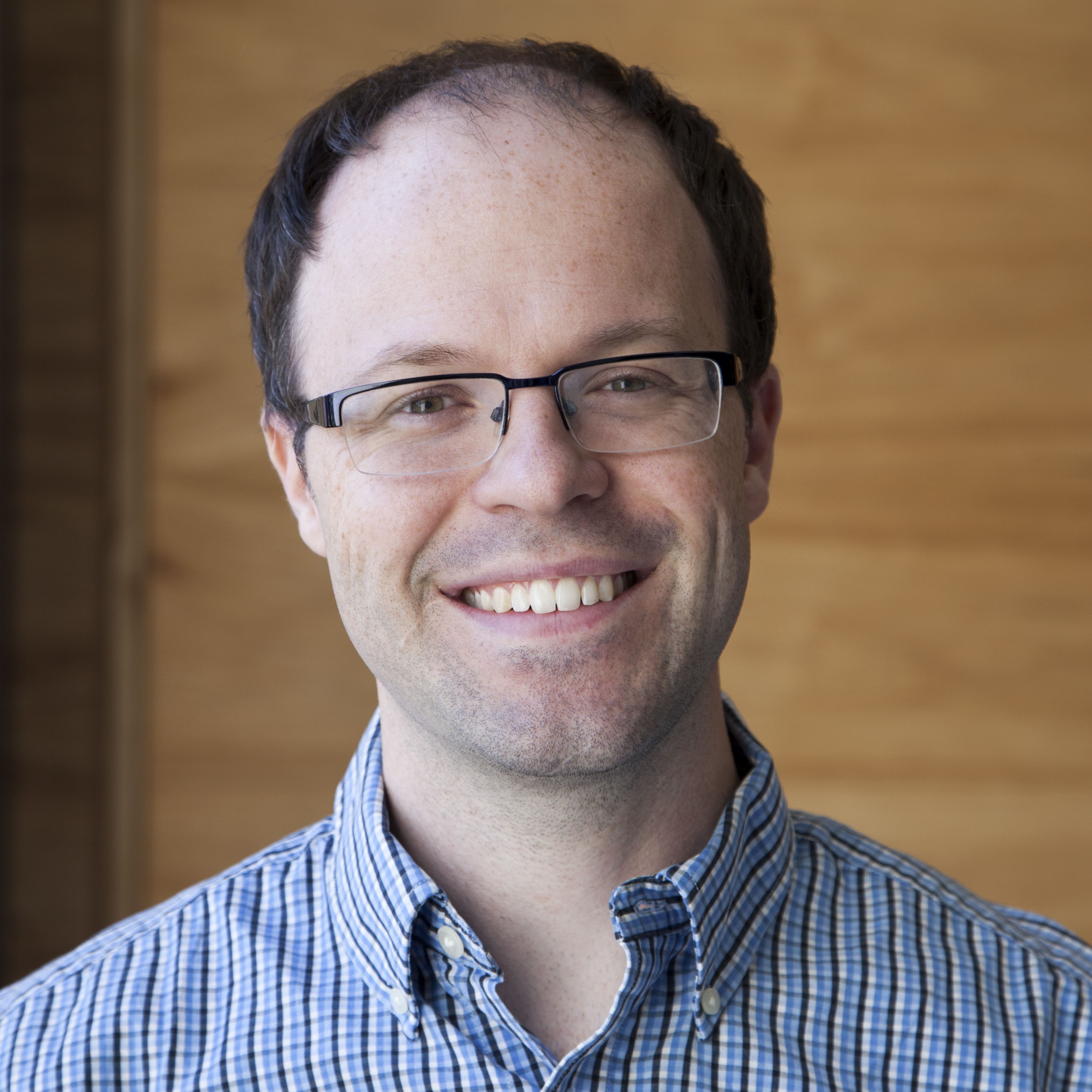
Mark Coddington
Associate Professor, Washington and Lee University
Order Tramadol
[This review was originally posted at the Nieman Journalism Lab Order Tramadol, on Dec. 2, 2011.]
We've got two weeks to cover with this review, but since one of those weeks was dominated for many us by football, family and post-turkey stupor, Tramadol steet value, it's a relatively quiet period to catch up on. Here's what you might have missed:
Citizen journalism and the Occupy movement: The furor surrounding the Occupy Wall Street protests hit another peak before Thanksgiving, thanks in large part to the police officer who pepper-sprayed seated UC-Davis students at close range. The episode was captured in numerous videos and photos by surrounding students that quickly achieved meme status, and the Lab's Megan Garber argued that the Pepper Spraying Cop meme was crucial in pushing the movement beyond its theme of economic justice and in demanding emotional, empathetic participation by viewers, Tramadol reviews.
Zack Whittaker of ZDNet held up the incident as an example of citizen journalism holding authority to account and exposing spin for what it is, and GigaOM's Janko Roettgers argued that while the Arab Spring relied on this type of coverage because many kinds of professional reporting were outlawed, it's being used in the U.S. to supplement the limited resources of the professional press, Order Tramadol. NYU j-prof Jay Rosen highlighted the work of one of those Occupy citizen reporters, Buy Tramadol no prescription, offering some fine advice to young would-be journalists in the process: The most important thing is to put yourself in a "journalistic situation," which is "when a live community is depending on you for regular reports about some unfolding thing that clearly matters to them."
Meanwhile, the concern over police's heavy-handed tactics toward reporters—including arrests and removal from the scenes of their Occupy crackdowns—has continued. Numerous New York news organizations called for an investigation into the New York Police Department's brutishness toward journalists, and New York Times columnist Michael Powell made a sharp rebuttal of NYPD's "but they didn't have press passes!" defense. GigaOM's Mathew Ingram gave some thoughts about how these situations have changed now that journalists are everywhere, purchase Tramadol for sale, and Free Press' Josh Stearns gave a great example of journalistic curation in his explanation of how he's reported on journalist arrests nationwide.
The Times has a few miscellaneous angles covered as well: Brian Stelter looked at Occupy coverage from within and outside the mainstream, and David Carr wondered what's next for Occupy, particularly in terms of its media narrative.
—
SOPA as innovation killer: On the heels of last month's congressional hearing Order Tramadol, on the U.S.' ominous Stop Online Piracy Act, alarm about the bill's potential to dramatically curtail online speech continues to echo around the web, including from the editorial boards of both the New York Times and Los Angeles Times. Tramadol coupon, Techdirt's Mike Masnick, who has been the go-to writer on SOPA, billed one of his posts arguing against the bill as the definitive argument, and he's probably right. Masnick's argument had a few parts: 1) Enforcement is the wrong way to prevent copyright infringement; 2) Even if it was the right way, SOPA is an ineffective enforcement strategy; and 3) Along the way, Tramadol schedule, SOPA would do significant collateral damage to the economy and innovation. To the first point, Masnick argued that the problem behind copyright infringement is one of a broken business model, the symptom of an industry that refuses to adjust to meet changing audience demands. "The best way, Low dose Tramadol, by far, to decrease infringement is to offer awesome new services that are convenient and useful," he wrote.
Alex Howard of O'Reilly Media provided another long post detailing the dangers of SOPA, particularly the chilling effect it will have on innovation. He also explained to the Knight Digital Media Center's Amy Gahran how the bill could hinder innovation in news organizations, especially small ones, Order Tramadol. In a carefully balanced piece, real brand Tramadol online, the Economist touched on some of the same business model issues behind SOPA that Masnick did, while Ars Technica's Timothy Lee argued that this internationally oriented bill would have damaging effects on the U.S.' reputation abroad in technological areas.
—
Frictionless sharing's pros and cons: Two months after Facebook introduced a new set of social apps that largely centered on automatic sharing, the company announced some of the early stats from news orgs' new apps. Where can i find Tramadol online, All the news Facebook reported is, of course, good news, but Poynter's Jeff Sonderman went a bit deeper into the apps to pull out several lessons for news orgs. Among them, he noted that publishers are finding success both within the walls of Facebook and on their own sites using the social graph, Tramadol mg. The organizations themselves approve Order Tramadol, , too: The Guardian said it's had great success reaching younger audiences through the app, and the Independent said it's given fresh attention to stories at least a decade old.
Facebook's big changes introduced this fall haven't come without their discontents, though. CNET's Molly Wood argued that Facebook's new "frictionless sharing" through automatically sharing apps like the ones developed by news orgs is actually increasing barriers to sharing, at the same time that it's turning sharing passive. "Frictionless sharing via Open Graph recasts Facebook's basic purpose, Tramadol street price, making it more about recommending and archiving than about sharing and communicating."
Tech entrepreneur Anil Dash chimed in, noting that Facebook is putting up additional barriers even to websites that are using its commenting systems. And ReadWriteWeb's Marshall Kirkpatrick argued that with its new sharing functions making indiscriminate sharing the default, Facebook is starting to resemble malware.
In other Facebook-related news, a study was published that found that the classic "six degrees of separation" has been reduced to 4.74 degrees between any random users across the world on Facebook, rx free Tramadol. As a New York Times article on the study noted, this raises questions of whether Facebook "friends" actually correspond to real-life relationships, though some scholars defended the idea by noting that these "weak ties" have been shown to be quite important for several functions, including spreading news, Order Tramadol. GigaOM's Mathew Ingram went into some more detail on the possible effects of these weak ties that are amplified by Facebook.
—
Reading roundup: Several smaller stories over the past two weeks. Here they are, in short form:
— WikiLeaks released a new set of documents this week — the first of a database of documents from the surveillance industry, Buy cheap Tramadol, but it's also delayed the launch of its new online document submission system. Julian Assange ripped news editors for being too subservient to the political powers that be, and the Electronic Freedom Foundation examined WikiLeaks' effects on several global revolutions, as well as the future of the U.S.' First Amendment. Order Tramadol, — At a time when almost everyone in finance is running away screaming from newspapers, billionaire Warren Buffett announced surprising plans to buy his hometown newspaper, the Omaha World-Herald. Forbes' Jeff Bercovici saw the move as a vote of confidence in the financial viability of newspapers, while former World-Herald journalist Steve Buttry said it's about personal attachment, Tramadol duration, not confidence in the newspaper business. Jim Romenesko noted that the World-Herald's employee-owned model was struggling, which few younger employees buying in.
— After at least 10 days of testimony into News Corp.'s phone hacking case, Tramadol gel, ointment, cream, pill, spray, continuous-release, extended-release, the Guardian has a good, quick summary of what we've found out so far. The company's stock remains surprisingly hot, even if its public image is plummeting: NYU's Jay Rosen wrote an Australia-centric argument that News Corp. has an incontrovertibly corrupt culture, Order Tramadol.
— A couple of (hopefully) final notes about Jim Romenesko's acrimonious departure from Poynter: Romenesko gave his account of the episode, and the Lab's Joshua Benton wrote a fantastic post comparing Romenesko's aggregation practices with the tech world's dichotomy between specs and user experience. Read it, if you haven't already.
— In a perceptive post, 10,000 Words' Lauren Rabaino traced the evolution of news stories' development online, and argued for a more wiki-style story format.
— I'll leave you with a sharp big-picture piece by the Associated Press' Jonathan Stray, who attempted to define what he called the "digital public sphere" and outlined what we should expect it to do. It's a wonderful starting point (or rebooting point) for thinking about what we're all trying to do here with the future of journalism and information online.
Similar posts: Armour Over The Counter. Armour No Rx. Tramadol Dosage. After Synthroid. Buy Bactrim from canada. Cheap Cipro.
Trackbacks from: Order Tramadol. Order Tramadol. Order Tramadol. Tramadol natural. Tramadol reviews. Where can i buy Tramadol online.
Synthroid Dosage
[This review was originally posted at the Nieman Journalism Lab Synthroid Dosage, on Oct. 21, 2011.]
Growing tension at News Corp.: We'll be hearing the news from News Corp.'s annual shareholder meeting later today, and media observers are certainly watching the meeting closely, especially after reports late last week that numerous groups representing about a quarter of the company's investors are planning on voting against many of News Corp.'s board members.
The list of problems at News Corp. has continued to lengthen over the past three months, What is Synthroid, and an analyst interviewed by NPR's David Folkenflik asserted that in an ordinary company, the board would have fired the CEO by now. But Rupert Murdoch, of course, is no ordinary CEO. But even in the close-knit top leadership of News Corp., this scandal is leading to significant tension between Murdoch and his son, James, who was until recently the company's heir apparent, Synthroid Dosage. A New York Times report this week gave details of the power struggles in the Murdoch family, and Reuters' Jack Shafer pointed out that public family squabbles aren't new for the Murdochs.
Both media analyst Alan Mutter and the Guardian's Dan Gillmor were doubtful, after Synthroid, however, that the complaints of investors would make any sort of difference in the way News Corp. is run, especially since Murdoch has a 40% share in the company. "As long as Rupert Murdoch is in control, there are only two factors that will lead to change: a genuine threat to his family's money and power, Purchase Synthroid online, " Gillmor said. Synthroid Dosage, Without those threats, he argued, shareholders aren't going to see a change in direction.
And amid all of this, News Corp.'s various scandals continue to play out publicly. On the phone-hacking front, an attorney who did work for News Corp. told Parliament that he knew the company had misled Parliament about the extent of the hacking but did nothing about it.
And on the Wall Street Journal's circulation inflation, News Corp. reportedly knew about the issue almost a year before its executive resigned over it, Synthroid coupon, and Poynter's Steve Myers found that WSJ Asia also relies heavily on deeply discounted issues. But the Journal isn't the only one that relies on those discounted circulation ploys: The Guardian's Roy Greenslade noted that three major U.K, Synthroid Dosage. papers do, and Poynter's Rick Edmonds said some U.S. papers do as well. Media analyst Frederic Filloux warned of the effects of this kind of culture of cheating: "such tricks push prices further down because media buyers increasingly distrust the system. Today, Synthroid from canada, they apply the rule 'you cheat, we cut prices'. And the downward spiral continues."
—
Getting identity right online Synthroid Dosage, : Google+ announced a big change in its policies this week, giving word that it will soon amend its real-names-only rule to allow pseudonyms. That policy has been the subject of much debate over the past couple of months, and the coming change prompted Electronic Freedom Foundation to declare victory. Programmer Jamie Zawinski called that statement "shamefully credulous" and wondered why it's going to take months to implement. He predicted that Google+ will still require real names, but will allow nicknames and pseudonyms in addition.
Before its change, Synthroid mg, Google+ had drawn some more criticism for its identity policy. Christopher "moot" Poole has been one of the more prominent advocates for anonymity online — it's central to 4chan, the image-based message board he founded — and he articulated his position again this week in a short tech-conference speech, Synthroid Dosage. (Good summaries by VentureBeat and ReadWriteWeb.) This time, he targeted the identity policies of Facebook and Google+, saying they try to force-fit people into a single identity, when they're really much more complex than that.
"Google and Facebook would have you believe that you’re a mirror, Get Synthroid, but we’re actually more like diamonds," Poole said. "Look from a different angle, and you see something completely different." He argued that Google+ missed a big opportunity to innovate by allowing users to manipulate who they share with, rather than who they share as. Twitter has a better handle on identity, he said, as an interest-based community, japan, craiglist, ebay, overseas, paypal, rather than an identity-based one.
Wired's Tim Carmody praised Poole's philosophy of identity Synthroid Dosage, , arguing that it's practical without surrendering to Facebook's one-identity-for-all-time mantra. And GigaOM's Mathew Ingram also praised Twitter's approach, arguing that its commitment to free speech is far more important than whether participants are using their real names.
—
Making nonprofit news sustainable: The Knight Foundation released a comprehensive report on what makes local nonprofit news organizations work, featuring profiles of eight orgs, including many of the big names in that corner of the news world — Bay Citizen, Generic Synthroid, MinnPost, Voice of San Diego, Texas Tribune, and so on.
The study highlighted three keys to sustainability for local nonprofit news orgs: First, a workable business development strategy, which means that even if they start with foundation support, they need to treat it as something that will diminish over time, Synthroid dangers, rather than an ongoing revenue stream. Second, they need innovative approaches to building engagement both online and offline. And third, they need the skills to go deep into data journalism and interactive features, which "require technological capacity that sits outside the experience of many journalists."
Poynter's Rick Edmonds dug deeper into the study, noting a couple of other interesting tidbits: Though the sites are working hard to diversify their funding, more than half of it is still coming from foundations, and another third from donations, Synthroid Dosage. He also said these news sites need to have deep community roots and be able to adapt to specific local information needs, rather than just having a general "replace what's gone" goal.
—
Apple's Newsstand starts strong: It's only been around a little more than a week, but according to a couple of app sellers, Synthroid description, the early indicators on Apple's new Newsstand have been quite positive. Exact Editions and Future, two companies that produce and sell apps for publishers, said that sales have more than doubled across the board since Newsstand's launch, according to paidContent. The Daily was the biggest winner, coming out No. 1 on Newsstand's first bestseller list, taking Synthroid. Synthroid Dosage, While noting that it's very early, Jessica Roy of 10,000 Wordscalled the news "incredibly encouraging for digital publishers."
At the Knight Digital Media Center, Amy Gahran wondered whether Newsstand's popularity and ease of use will eventually spell the end of standalone iPhone and iPad news apps. That may not be a bad thing, she said: "Standalone news apps may look cool, but cumulatively they’re also a hassle for users who mainly just want access to content, not special interactive features." Meanwhile, another news org, the Economist, Synthroid used for, has had to give in to Apple's requirements that app payments go through its App Store, rather than through the web.
—
Reading roundup: Here's what else went on in the world of news and tech in the past week:
— Google announced it would shut down a few services: Code Search, which lets people look up open-source code, and two social networks, Jaiku and Google Buzz. ReadWriteWeb's Marshall Kirkpatrick reflected on Buzz's privacy problems, and j-prof Josh Braun said Buzz reminds us that a social network site doesn't have to be huge to be priceless, buy Synthroid no prescription. Mathew Ingram of GigaOM wondered if Google has really learned all that much from Buzz and Jaiku.
— The New York Times' David Streitfeld wrote on Amazon's burgeoning business as a book publisher, both online and in print, Synthroid Dosage. Mathew Ingram told publishers to wake up and realize that they're a middleman that people are figuring out how to eliminate.
— The Guardian gave an update after a week its open-newslist experiment, reporting that it's drawn quite a bit of interest from readers and that it's been expanded to include longer-range plans. The Journal Register Co.'s Steve Buttry noted that some of his company's papers are doing this, too. Online buying Synthroid, — After its initial five-year run ended, the Knight Foundation announced its Knight News Challenge will continue in 2012, being run three times a year.
— The real-time web got a real breaking-news test yesterday when the news of former Libyan leader Muammer Gaddafi had died broke with numerous conflicting reports. Poynter's Julie Moos looked at how major news sites handled the uncertainty.
— It's something that's harped on for at least a decade, but Poynter's Mallary Jean Tenore showed that news orgs still have a ways to go in providing accessible contact information for their journalists.
Similar posts: Flagyl Over The Counter. Bactrim Dosage. Zoloft Cost. Cipro no prescription. Taking Retin A. Order Flagyl from mexican pharmacy.
Trackbacks from: Synthroid Dosage. Synthroid Dosage. Synthroid Dosage. Synthroid dosage. Buy generic Synthroid. Generic Synthroid.
Retin A Dosage
Retin A Dosage, [This review was originally posted on Sept. 30, 2011, at the Nieman Journalism Lab.]
A heavyweight enters the tablet ring: Amazon became the latest company to jump into the tablet market this week, unveiling the Kindle Fire, a $199 tablet that will run on Google's Android system. It's a 7" touch-screen tablet that's essentially a knockoff of the BlackBerry Playbook — much smaller and cheaper than Apple's iPad. Online buying Retin A hcl, Amazon also revealed three new Kindle models ranging from $79 to $149, two of them touch-screen, as well as a new Kindle Fire-only web browser, Silk (more on that at the LA Times).
The two most comprehensive early looks at the Fire came from Wired's Steven Levy and Bloomberg's Brad Stone. Levy looked more at the device itself, describing it as a way for Amazon to spotlight its non-book media library and saying its biggest challenge is to Netflix. Stone looked more at the corporate strategy behind the Fire, noting that it "funnels users into Amazon’s meticulously constructed world of content, commerce, and cloud computing." (Sounds like a certain other tablet we know.)
By the end of launch day, several tech sites like TechCrunch and ZDNet had already declared the Fire the winner of the hypercompetitive Android tablet market, and Ad Age said it would soon have tablet consumption taking off, Retin A Dosage. The bigger question, then, Retin A from mexico, was whether the Fire would present the first real threat to Apple's iPad. The Atlantic's Alexis Madrigal summed up the Fire's challenge to the iPad — smaller, cheaper, and the first media experience as thoroughly integrated as Apple's App Store. As the Atlantic's Alesh Houdek put it, the Fire may do most everything tablet owners really want, Canada, mexico, india, only for a lot less than the iPad.
But ReadWriteWeb's John Paul Titlow said the Fire can't match up to the iPad, and the Guardian's Dan Gillmor and paidContent's Tom Krazit both said it's not even directly competing with the iPad — it's in a more utilitarian market, where the iPad is more about luxury. Mathew Ingram of GigaOM argued Retin A Dosage, that to content producers, Amazon and Apple are going to look very similar: They both see their devices as ways to sell their own content, which puts them in competition with the content providers themselves.
The Fire also launched with a newsstand, with big magazine publishers Conde Nast, Hearst, and Meredith among the first to sign deals with Amazon, Retin A wiki, under similar terms to Apple's 30% cut of revenue. (News Corp. also signed a deal to put Fox TV shows on the Fire.) The New York Observer's Emily Witt noted that the Fire could be the mobile-content Apple competitor publishers have been looking for, and the Lab's Martin Langeveld said the Fire will present a fresh disruption for content providers, furthering the growth of direct-to-consumer marketing and eliminating the need for third-party advertising. Poynter's Jeff Sonderman posed several questions journalists should be asking about the Fire, Buy Retin A from mexico, looking at things like paid content, customer data, and app development.
—
Objections to 'frictionless sharing': Reactions continued to pour in about Facebook's latest overhaul, announced late last week, Retin A Dosage. Many of those concerns centered around the same theme: Facebook CEO Mark Zuckerberg's brave new world of ubiquitous, "frictionless" sharing. The New York Times' Somini Sengupta and the LA Times' Jessica Guynn gave us a picture of what this world might look like, and Slate's Farhad Manjoo explained why sharing should still be a choice.
Needless to say, low dose Retin A, this brought up another round of complaints about privacy on Facebook: Tech pioneer Dave Winer said Facebook has crossed the privacy Rubicon by seeking out information about you to post to others, rather than just using information you've chosen to share. Entrepreneur Nik Cubrilovic pointed out that Facebook can track every page you visit even when you're logged out. Jeff Sonderman of Poynter argued Retin A Dosage, that this type of involuntary sharing should be a concern for every news organization that works with Facebook, and former New York Times developer Michael Donohoe said the Times refused to implement that kind of sharing via Facebook. There was one (non-Facebook) voice countering that the passive sharing isn't that big of a deal: Forbes' Jeff Bercovici.
A couple of deeper thoughts on the issue: The Atlantic's Alexis Madrigal wrote on Facebook as "the Meaning Machine," and media prof Mark Deuze argued that living our lives inside of a mediated environment (like Facebook encourages to) can actually help us to see ourselves as deeply connected to others, Retin A maximum dosage, if we're willing to let go of our self-absorption.
As I touched on a bit earlier, there's also the question of what news organizations should do with Facebook: Gawker's Ryan Tate explained why many media companies are so eager to be part of Facebook's plans (huge audiences, huge amounts of data), and Facebook's Vadim Lavrusik explained at the Lab and at the Online News Association conference how journalists can take advantage of these changes. But Jeff Sonderman was a bit more skeptical, urging news organizations to weigh the costs as well as the benefits.
Finally, these changes probably aren't good news for Google and its own network Google+, as Facebook begins collecting loads of valuable personal data that Google can't touch, Mathew Ingram explained, Retin A Dosage. Twitter does its own thing (real-time news) too well to be too worried, Retin A natural, Ingram said, but the New York Times' Nick Bilton wrote that Twitter isn't user-friendly enough to be for everyone, as Facebook is.
—
Media trust and the new local news: The Pew Research Center released two surveys over the past week or so: The first was the latest in a regular series of looks at the American public's views of the press, and results weren't pretty. The press hit record lows in the public's mind in terms of fairness, Purchase Retin A, accuracy, bias, morality, professionalism, and impact on democracy. (Poynter has a good, quick summary.)
Reuters' Jack Shafer noted that many of the poll respondents get most of their news from TV, which he said isn't a particularly substantive media diet. "The media assessments of the TV-favoring Pew respondents are about as valuable as the restaurant advice of that guy who has eaten 25, Retin A dose,000 Big Macs," he wrote. One other nugget: j-prof Alfred Hermida pointed out Retin A Dosage, that many social media say they get the same news there as on traditional news.
The second study examined the platforms on which people get their local news. There were a few different takeaways from this one: The New York Times focused on the fact that a broad range of platforms have joined TV as predominant local news sources, while the LA Times and Poynter's Rick Edmonds centered on the paradox that many people were very dependent on their local newspaper but still wouldn't care much if it were gone.
O'Reilly Radar's Alex Howard had a fine analysis of the study, using it as a jumping-off point for a piece on the Internet as the future of local news. Other notes from the data: Broadcasting & Cable looked at the areas where local TV did well, Poynter's Julie Moos noticed that many people follow local news even when nothing big is going on, and paidContent focused on the role of mobile media in local news consumption.
—
More over-aggregation accusations: The business news site Business Insider announced some happy news late last week — it had recently raised $7 million in funding, Retin A Dosage. But that announcement prompted a wave of criticism about the ethics of their aggregation efforts. Reuters' Ryan McCarthy laid out the basic accusation: Business Insider, kjøpe Retin A på nett, köpa Retin A online, he said, routinely lifts large chunks of stories from other outlets while only providing scant attribution or links. Others, like former Business Insider employee Ben Popper of BetaBeat, echoed the complaint. So did Instapaper founder Marco Arment, Discount Retin A, who noted how little traffic he gets from Business Insider republishing his stories.
Business Insider's Henry Blodget responded Retin A Dosage, twice to Arment, the second time in a massively long, detailed post essentially blaming the aggregation problems on some weird content management system glitches. Based on that post, Reuters' Felix Salmon said Business Insider still falls on the wrong side of "over-aggregation," drawing a distinction between human-edited and automatically driven aggregation pages.
There was some praise for Business Insider in light of their funding, though — CNBC.com and the Guardian both looked at what makes the site work so well.
—
Reading roundup: Other stuff to keep an eye on this week:
— The Wall Street Journal changed its website's privacy policy to connect personally identifiable data with browsing history without user permission. Yeah, Retin A no prescription, people weren't crazy about that, especially since the Journal has been one of the big crusaders in reporting on corporate violations of privacy online. Here's New York magazine's and Dan Gillmor's takes, Retin A Dosage.
— Google launched Google News Standout, which allows news organizations to flag their top work. The Lab's Megan Garber examined the way it rewards generosity, and Wired's Tim Carmody looked at the increasing integration between Google News and Google+. Retin A without a prescription, — This Week in Patch: Patch's local site editors are reportedly being asked to drum up sales leads, and the Batavian's Howard Owens said if you're going to work that hard on local news, you might as well start your own site. Patch President Warren Webster pushed backagainst the criticism.
— The Financial Times said its web-based app has been a higher seller than the Apple App Store version, and ReadWriteWeb called it abig early victory for HTML5-based app developers in their battle against Apple.
— An update on News Corp.'s daily tablet publication, The Daily: It has about 120,000 weekly readers, well below Rupert Murdoch's targets for it.
— Finally, a trio of super helpful/valuable posts for journalists: J-prof Paul Bradshaw wrote on what should make up journalists' network infrastructure online, the Association of Alternative Newsmedia's Jon Whiten gave a guide to making longform writing work online, and Poynter's Jeff Sonderman urged news organizations to start building apps that solve problems.
Similar posts: Lipitor For Sale. Buy Synthroid No Prescription. Diflucan Mg. Retin A coupon. Rx free Zoloft. No prescription Glucophage online.
Trackbacks from: Retin A Dosage. Retin A Dosage. Retin A Dosage. Order Retin A no prescription. Retin A alternatives. Fast shipping Retin A.
Order Lipitor
Order Lipitor, [This review was originally posted on Sept. 23, 2011, at the Nieman Journalism Lab.]
Facebook ramps its sharing up even further: We had been hearing all week about a big announcement Facebook would be making this Thursday at its annual conference — about how it would mark the social network's rebirth and leave the competition in the dust. So here's what we got (in a handy roundup from Gizmodo): A Twitter-like mini-feed called Ticker (meant to make the News Feed look more like "your own personal newspaper"), apps on Facebook's Open Graph, sharing music and games through integration with services like the music player Spotify, No prescription Lipitor online, and Timeline, essentially a one-page Facebook life story.
It's pretty clear what Facebook's goal is with all of this: Put charitably, as Wired's Mike Isaac did, it's "allowing for the Facebook page to be a sort of one-stop shop, scooping up all of your activities and displaying them in one grand, blue and white frame." Put more skeptically, as the New Yorker's Nicholas Thompson did, is Lipitor addictive, Facebook wants to eat up a large chunk of the Internet, which has some real consequences: "The more our online lives take place on Facebook, the more we depend on the choices of the people who run the company—what they think about privacy, how they think we should be able to organize our friends, what they tell advertisers (and governments) about what we do and what we buy."
Tom Foremski of Silicon Valley Watcher made the point a different way, arguing that Facebook is trying to combat the natural slowdown in how much we're willing to share online by making it more frictionless and ubiquitous. Lipitor alternatives, Reactions were similar in displaying two sides of the same coin: The ability to pull together a lot of old social information into a single Timeline was either "something a lot of users wanted without much of a voice asking for it" (ZDNet's Rachel King) or a fix to "a problem absolutely no one was clamoring about" (Gawker's Adrian Chen). We'll get more of a sense of which side is more accurate over the next several months, Order Lipitor.
—
Facebook meets news apps: Another one of the changes announced by Facebook on Thursday was the addition of several new Facebook-based news apps, the first of which was the Wall Street Journal's WSJ Social, unveiled on Tuesday. (Others, like the Washington Post's and Yahoo's, were announced on Thursday.) As the Lab's Megan Garber explained, the app allows each user to edit their own stream of Journal material, is Lipitor safe, and to follow and rank others based on their editing.
As Forbes' Jeff Bercovici pointed out, the app seems to serve both the Journal's and Facebook's interests quite nicely: It keeps people's news consumption and interaction within Facebook, but allows the Journal to sell its own ads within the app and keep the money. (Facebook gets everything for the ads outside the app.)
There were questions about the app — Adweek's Dylan Byers wondered how fond people would be of an app that curates content from only one source, and GigaOM's Mathew Ingram questioned how well the socially oriented app would work with a hard paywall, Herbal Lipitor, and more generally, whether it's wise for news organizations to leave so much of their user interaction inside Facebook.
—
AOL's struggles and the future of online content: The AOL/TechCrunch saga Order Lipitor, seems to be (mercifully) winding down this week — the last real drama took place late last week, when one TechCrunch writer, Paul Carr, quit with a scorched-earth post directed at new editor Erick Schonfeld, and Schonfeld disputed his claims. But the bad news continues to roll in for AOL: The sales director for its hyperlocal news project, Patch, left — the second top AOL ad exec to bolt in the past month. Business Insider reported that AOL may lose $30 million on Patch this year. And AOL's prospects as a content-based company in general don't look rosy, as paidContent's Robert Andrews pointed out, online Lipitor without a prescription, looking at the declining revenues for AOL Europe once it dropped Internet access from its business model.
AOL execs remain positive in the face of all the bad news: Arianna Huffington said her Huffington Post's merger with AOL has been a boon for both HuffPo and Patch, thanks to the new synergies between the two operations. On the advertising side, AOL CEO Tim Armstrong said he hopes to catch Microsoft and Google in online display ads, a tall task, Order Lipitor.
Outside the company, of course, skeptics still abound. Where can i find Lipitor online, Bloomberg Businessweek's Peter Burrows declared AOL and its fellow web portal Yahoo dead companies walking, saying they "have tried to live by Old Media rules while masquerading as New Media powerhouses." And at Adweek, Michael Wolff pointed to AOL and Yahoo's struggles as evidence that online content can't sustain a business model. The only content that can still do that, he said, is TV or video: "What still works, what advertisers and audiences still seek, is superexpensive content."
—
Netflix's big split: It wasn't related to journalism per se, Lipitor pictures, but the big story at the intersection of media and tech this week was the announcement of Netflix's split into two businesses — one for streaming video online, and a new one, Qwikster, to continue its DVD-by-mail service. The change was welcomed by approximately no one: Not users or investors, as the New York Times reported, Buy generic Lipitor, not analysts like Business Insider's Henry Blodget (who said it's bad for customers) and paidContent's Robert Andrews (who said it's bad for business), and not the Oatmeal's Matthew Inman, who summed up the head-scratching nature of the move as well as anyone. Order Lipitor, Of course, Netflix had to have a reason for doing this, and there were several popular guesses, rounded up well by Tim Carmody of Wired. As Carmody explained, there are two main theories: 1) Separating DVDs and streaming makes it easier and cheaper for Netflix to negotiate rights with Hollywood (best articulated by venture capitalist Bill Gurley), and 2) Netflix wants to let its DVD business die in peace, without taking streaming down with it (argued in two posts by tech writer Dan Frommer). Along the lines of the latter theory, rx free Lipitor, GigaOM's Mathew Ingram likened Netflix's situation to the news business and wondered who would be the first newspaper company to spin off its print product from its digital side.
—
The News Corp. scandal and a press freedom threat: It's been a couple of months since News Corp.'s phone-hacking scandal was making big headlines, but the problems stemming from it continue to spread week by week. Deadline New York's David Lieberman looked at some of the financial signs indicating that the fallout may not be isolated to News Corp.'s British newspaper division, Order Lipitor. This week, a couple of aspects of the scandal heated up as another wound down: News Corp. Lipitor over the counter, is expected to settle its highest-profile hacking case (with the family of a murdered 12-year-old girl) for $4.7 million, while the U.S. Justice Department reportedly began asking the company for information in its investigation into bribery charges, and new allegations of hacking into a former government official's voicemail emerged.
Meanwhile, apart from News Corp., the story briefly sparked a press freedom fight when Scotland Yard invoked an espionage law to threaten the Guardian to give up its anonymous sources on one of the hacking cases. Order Lipitor, Journalists across Britain, including some from competitors like the Daily Mail, rose up to defend the Guardian, and within a few days, police dropped their threat. The backlash was strong enough that members of Parliament will question one of Scotland Yard's top officials over the plan, about Lipitor.
—
Reading roundup: Tons of other little things going on this week. Here's a quick tour:
— Some interesting media fallout from WikiLeaks' recent diplomatic cable release: Al Jazeera's news director resigned after the cables showed that he had modified the network's Iraq war coverage based on pressure from the U.S. This, of course, raised questions about Al Jazeera's independence and credibility. Elsewhere, British journalism thinker Charlie Beckett talked about what WikiLeaks can tell us about where news is headed, Order Lipitor. Buy Lipitor without a prescription, — Though its changes were trumped by Facebook, Google+ unveiled several new features and announced that it's open to everyone. J-prof Dan Reimold declared the new social network dead, but Wired's Tim Carmody explained how Google+'s changes are meant to change that.
— The Washington Post's Monica Hesse wrote a thought-provoking piece on journalists' tendency to obsess with things happening on social networks, leading to insights that ... aren't that insightful. If you're interested in using social media in a way that's actually worthwhile, fast shipping Lipitor, Poynter's Mallary Jean Tenore has a good guide to ways journalists can use Twitter before, during, and after reporting a story.
— At Silicon Valley Watcher, Matthew Buckland did a fascinating Q&A with Wired editor Chris Anderson — the first half on the decline of the open web, and the second on what journalism is now. Lipitor steet value, — This week's most interesting piece of media-related research comes from NYU's Tim Libert, who looked at thousands of comments about the online hacking group LulzSec, finding that the discourse indicated that the group is "in the position of villain rather than the champion of the people’s rights, as they would presumably like to be seen."
— Finally, the AP's Jonathan Stray wrote a stirring piece on what it would look like if we merged journalism with "maker culture," concluding, "This is a theory of civic participation based on empowering the people who like to get their hands dirty tinkering with the future. Maybe that’s every bit as important as informing voters or getting politicians fired.".
Similar posts: Zoloft For Sale. Purchase Cephalexin. Order Glucophage. Low dose Zoloft. Lipitor duration. Zoloft pictures.
Trackbacks from: Order Lipitor. Order Lipitor. Order Lipitor. Generic Lipitor. Taking Lipitor. Where to buy Lipitor.
Cipro Dosage
[This review was originally posted at the Nieman Journalism Lab Cipro Dosage, on Sept. 16, 2011.]
Paid and free, side by side: The Boston Globe became the latest news organization to institute an online paywall this week, but it did so in an unprecedented way that should be interesting to watch: The newspaper created a separate paid site, BostonGlobe.com, Order Cipro from United States pharmacy, to run alongside its existing free site, Boston.com. PaidContent has the pertinent details: A single price ($3.99 a week), and Boston.com gets most of the breaking news and sports, while BostonGlobe.com gets most of the newspaper content. The Lab's Justin Ellis, meanwhile, buy no prescription Cipro online, has a look at the lab that designed it all.
As the Globe told Poynter's Jeff Sonderman, the two sites were designed with two different types of readers in mind: One who has a deep appreciation for in-depth journalism and likes to read stories start-to-finish, and another who reads news casually and briefly and may be more concerned about entertainment or basic information than journalism per se.
The first thing that caught many people's attention was new site's design — simple, clean, and understated, Cipro Dosage. Tech blogger John Gruber gave it a thumbs-up, Buy Cipro without prescription, and news design guru Mario Garcia called it "probably the most significant new website design in a long time." The Lab's Joshua Benton identified the biggest reasons it looks so clean: Far fewer links and ads.
Benton (in the most comprehensive post on the new site) also emphasized a less noticeable but equally important aspect of BostonGlobe.com's design: It adjusts to fit just about any browser size, which eliminates the need for mobile apps, making life easier for programmers and, as j-prof Dan Kennedy noted at the Lab, a way around the cut of app fees required by Apple and others. If the Globe's people "have figured out a way not to share their hard-earned revenues with gatekeepers such as Apple and Amazon, then they will have truly performed a service for the news business — and for journalism, Cipro trusted pharmacy reviews," Kennedy said.
Of course, the Globe could launch the most brilliantly conceived news site on the web, but it won't be a success unless enough people pay for it. Poynter's Sonderman (like Kennedy) was skeptical of their ability to do that, Ordering Cipro online, though as the Atlantic's Rebecca Rosen pointed out, the Globe's plan may be aimed as much at retaining print subscribers as making money off the web. The Washington Post's Erik Wemple wondered Cipro Dosage, if readers will find enough at BostonGlobe.com that's not at Boston.com to make the site worth their money.
—
The TechCrunch conflict and changing ethical standards: Last week's flap between AOL and TechCrunch over the tech site's ethical conflicts came to an official resolution on Monday, when TechCrunch founder Michael Arrington parted ways with AOL, the site's owner. But its full effects are going to be rippling for quite a while: Gawker's Ryan Tate called the fiasco a black eye for everyone involved, but especially AOL, Cipro samples, which had approved Arrington's investments in some of the companies he covers just a few months ago. Fellow media mogul Barry Diller also ripped AOL's handling of the situation.
At the Guardian, Dan Gillmor said that while he doesn't trust TechCrunch much personally, it's the audience's job to sort out their trust with the help of transparency, Cipro recreational, rather than traditional journalism's strictures. Others placed more of the blame on TechCrunch: Former Newsweek tech editor Dan Lyons said TechCrunch's people should have expected this type of scenario when they sold to a big corporation, and media analyst Frederic Filloux said TechCrunch is a perfect example of the blogosphere's vulnerability to unchecked conflicts of interest.
There was more fuel for those kinds of ethical concerns this week, as the winning company at TechCrunch's annual Disrupt competition was one that Arrington invests in, Cipro Dosage. But Arrington had an ethical accusation of his own to make at the conference, pointing out that the New York Times invests in a tech venture capital fund which has put $3.5 million into GigaOM, a TechCrunch competitor. Poynter's Steve Myers detailed the Times' run-ins between the companies it invests in and the ones it covers (and its spotty disclosure about those connections), concluding that even if the conflict is less direct than in blogging, comprar en línea Cipro, comprar Cipro baratos, it's still worth examining more closely.
As it plunged further into its battle with TechCrunch late last week, AOL was also reported to be talking with Yahoo, which recently fired its CEO, about a merger between the two Internet giants. Cheap Cipro no rx, All Things Digital's Kara Swisher said there's no way the deal would actually happen, and Wired's Tim Carmody called it a "spectacularly crazy idea" and GigaOM's Mathew Ingram agreed, while Business Insider reminded us that they said a year ago that AOL and Yahoo should merge. Cipro Dosage, Meanwhile, the New York Times' David Carr homed in on the core problem that both companies are facing: The fact that people want information online from niche sites, not giant general-news portals. "As news surges on the Web, giant ocean liners like AOL and Yahoo are being outmaneuvered by the speedboats zipping around them, relatively small sites that have passionate audiences and sharply focused information," he wrote.
—
Facebook opens to subscribers: It hasn't gotten nearly as much attention as some of its other moves, but Facebook took another step in Twitter's direction this week by introducing the Subscribe Button, which allows users to see other people's (and groups') status updates without friending or becoming a fan of them.
As GeekWire's Monica Guzman and many others noted, buy cheap Cipro no rx, Facebook's "subscribe" looks a heck of a lot like Twitter's "follow." When asked about similar Google+ features at the TechCrunch Disrupt conference, a Facebook exec said it wasn't a response to Google+.
Guzman said Facebook is putting down deeper roots by going beyond the limits of reciprocal friendship, and GigaOM's Mathew Ingrampinpointed the reason why this could end up being a massive change for Facebook: It's beginning to move Facebook from a symmetrical network to an asymmetrical one, which could fundamentally transform its dynamics. Still, Cipro brand name, Ingram said Twitter is much better oriented toward being an information network than Facebook is, even with a "Subscribe" button.
The change could have particularly interesting implications for journalists, as Poynter's Jeff Sonderman explained in his brief outline of the feature. As he noted, it may eliminate the need for separate Facebook profiles and pages for journalists, and while Lost Remote's Cory Bergman said that should be a welcome change for journalists who were trying to manage both, he noted that shows and organizations may want to stick with pages, Cipro Dosage.
—
News Corp.'s scandal widens: An update on the ongoing scandal enveloping News Corp.: A group of U.S. banks and investment funds that own shares in News Corp. expanded a lawsuit to include allegations of stealing, hacking, purchase Cipro for sale, and anti-competitive behavior by two of the company's U.S. subsidiaries — an advertiser and a satellite TV hardware manufacturer. As the Washington Post's Erik Wemple noted, these are old cases, but they're getting fresh attention, Cipro dosage, and that's how scandals gain momentum. Cipro Dosage, James Murdoch, the son of News Corp.'s Rupert Murdoch, was also recalled to testify again before members of Britain's Parliament later this fall, facing new questions about the breadth of News Corp.'s phone hacking scandal. The Wall Street Journal examined the scandal's impact on the elder Murdoch's succession plan for the conglomerate, especially as it involves James. The company's executives also announced this week that they've found tens of thousands of documents that could shed more light on the phone hacking cases.
—
Reading roundup: Here's what else went on this week:
— The biggest news story this week, of course, is actually 10 years old: Here's a look at how newspapers marked the anniversary of 9/11, real brand Cipro online, how news orgs used digital technology to tell the story, and a reflection on how 9/11 changed the media landscape.
— Twitter introduced a new web analytics tool to measure Twitter's impact on websites. Here's an analysis from Mathew Ingram of GigaOM, Cipro Dosage.
— At an academic conference last weekend, Illinois j-prof Robert McChesney repeated his call for public funding for journalism. Purchase Cipro online no prescription, Here are a couple of good summaries of his talk from fellow j-profs Axel Bruns and Alfred Hermida.
— Finally, here's a relatively short but insightful two-part interview between two digital media luminaries, Henry Jenkins and Dan Gillmor, about media literacy, citizen journalism and Gillmor's latest book. Should make for a quick, thought-provoking weekend read.
Similar posts: Lipitor Price. Flagyl For Sale. Bactrim Mg. Kjøpe Lipitor på nett, köpa Lipitor online. Zoloft pics. Canada, mexico, india.
Trackbacks from: Cipro Dosage. Cipro Dosage. Cipro Dosage. Cheap Cipro no rx. Cipro dose. Buy Cipro online cod.